By Riwaj Roka (Kalimpong, India)
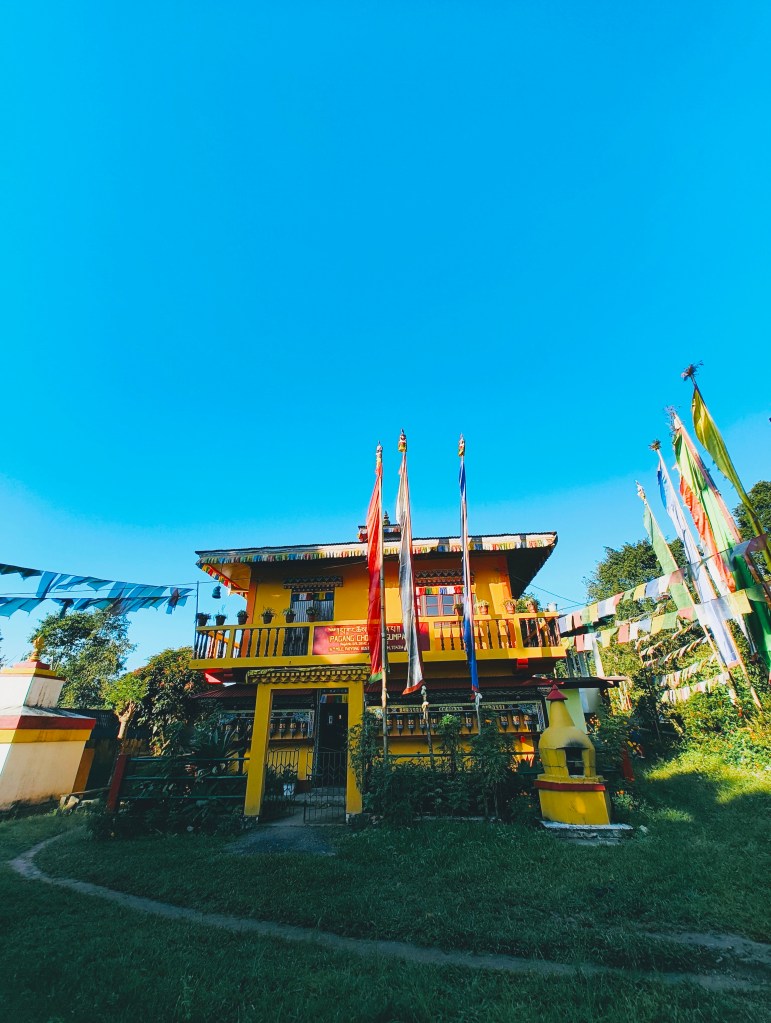
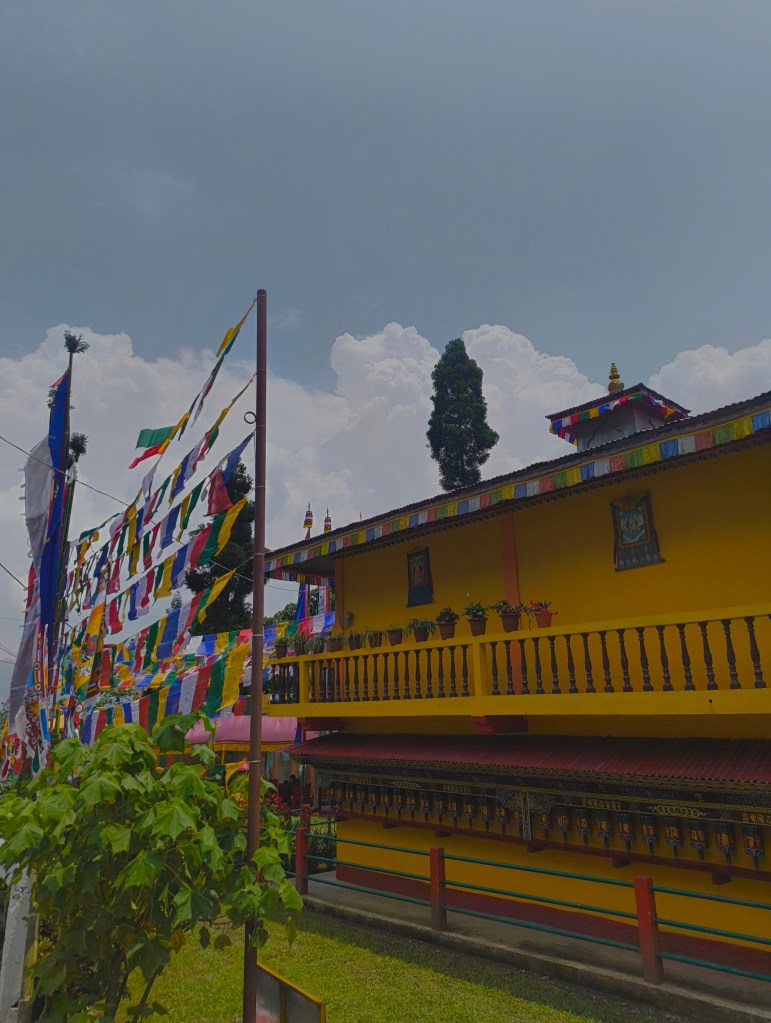
When I think of my childhood, the first image that rises in my mind is of prayer flags fluttering above our roof and the soft echo of morning chants drifting with the hillside. My home stands just below Pagang Choling Gumba in Kalimpong, India, and those sounds shaped my earliest memories.
Before the sun touched the ridges of the hills, the village would awaken gently. Strands of coloured prayer flags swayed between pine trees, carrying silent prayers into the wind. The air felt sacred even in its simplicity-people preparing for school, for work, for another ordinary day beneath the vast Himalayan sky.
The oral folklore of our village, passed down through generations, has always fascinated me. Though I am not a Buddhist, I spent my childhood playing around the monastery grounds, forming emotional bonds that went beyond religious identity. Faith, in those moments, was not about doctrine-it was about belonging.
The elders would often speak of a miraculous Holy Vase that once came flying from Tibet or Bhutan. It is said to have rested for some time at our Gumba, where the head lama worshipped it before it flew again toward Sikkim. Whether myth or miracle, the story lives in our collective memory. For the villagers, the vase was a blessing – an assurance that the monastery would continue to protect and prosper the community.
Perhaps folklore evolves, perhaps details change with time. But faith remains constant. The monastery still stands strong, its walls echoing with devotion to Lord Buddha, its presence a steady source of peace and blessing for the village.
I still remember last year when the sacred Kangyur scriptures were brought from Bhutan. During Buddha Purnima, we celebrated for three days – chants, rituals, gatherings, and shared meals. Every year the Buddha Purnima is celebrated with immense joy and enthusiasm by the villagers. The entire village felt like a spiritual dome beneath the sub-Himalayan sky, wrapped in tranquility and grace.
Those memories are not just fragments of childhood; they are the foundation of my identity – where prayer flags whisper, and the hills remember.
Moving forward with the stories of Kalimpong, one cannot ignore the emotional and political undercurrent that shapes our region – the long-standing Gorkhaland movement. It is not merely a political demand; it is a story of identity, belonging, and the silent yearning of a people whose voices echo through the hills.
In the sub-Himalayan belt, conversations often revolve around Sikkim,and the North Eastern states. Yet North Bengal – especially the Darjeeling and Kalimpong hills – is frequently overlooked. Beneath the mist and beauty lies a persistent thirst for identity: the demand for Gorkhaland.
It is a historical aspiration that continues to flutter in the winds of Kalimpong and the Darjeeling hills.
Within this narrative it leads to a nuanced distinction – between Nepali Gorkhas and Indian Gorkhas – a distinction that has shaped social emotions and political consciousness in the region. The people of Kalimpong and Darjeeling are Indian Gorkhas, rooted in Indian soil, yet often compelled to assert their identity repeatedly.
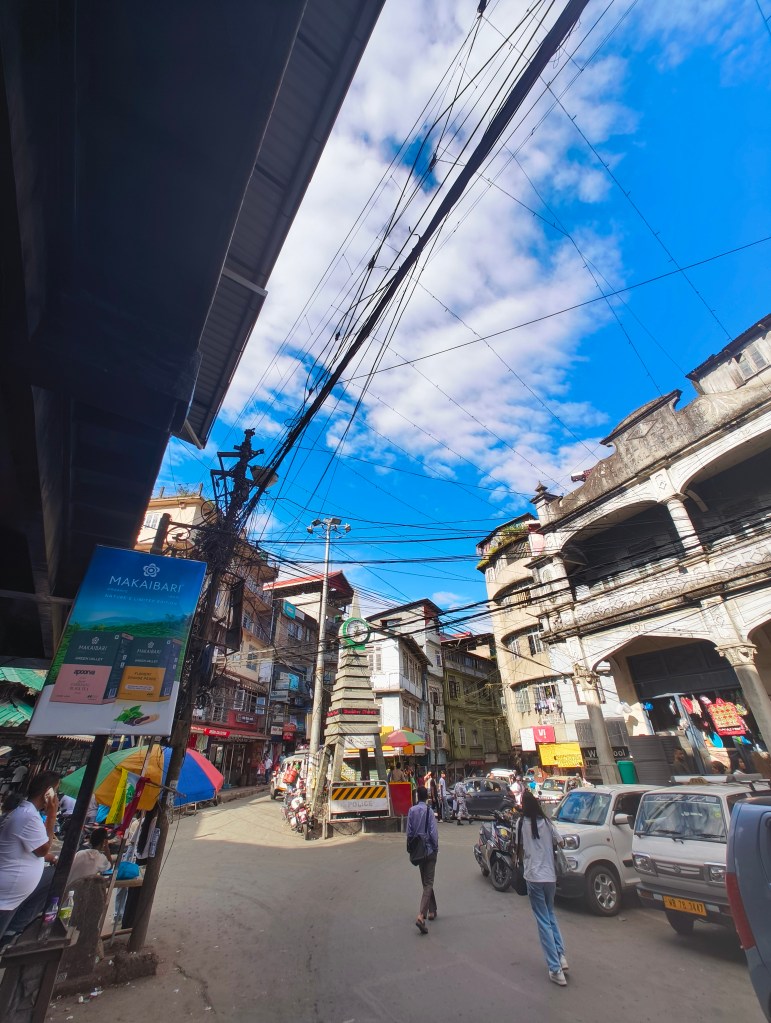
Growing up in the hills, I never really witnessed intense agitations or protests. Life felt grounded-rooted more in culture, community, and quiet resilience than in slogans or movements. But one incident in Siliguri during the Covid period shifted something within me.
The lockdown had just eased, though international borders like the one with Nepal were still closed. My sister and I were shopping when a shopkeeper casually asked, “Are the borders open now?” The question seemed ordinary, yet it carried an assumption. My sister reacted instantly, her voice sharp with emotion. I, however, stood still- absorbing the weight behind that simple question. It wasn’t about travel. It was about identity. It was about how Nepali-speaking Indians are often perceived.
At home, we spoke Nepali- the language of lullabies, childhood arguments, market chatter, and festival songs. It was never foreign to us. It was as Indian as the mountains we grew up in. Yet, beyond the hills, it often demanded explanation. We found ourselves repeatedly asserting who we were, as if our belonging required proof.
Perhaps this is why the idea of Gorkhaland carries emotional weight for many. It is less about drawing new borders and more about recognition- about being seen and acknowledged without having to constantly justify our identity.
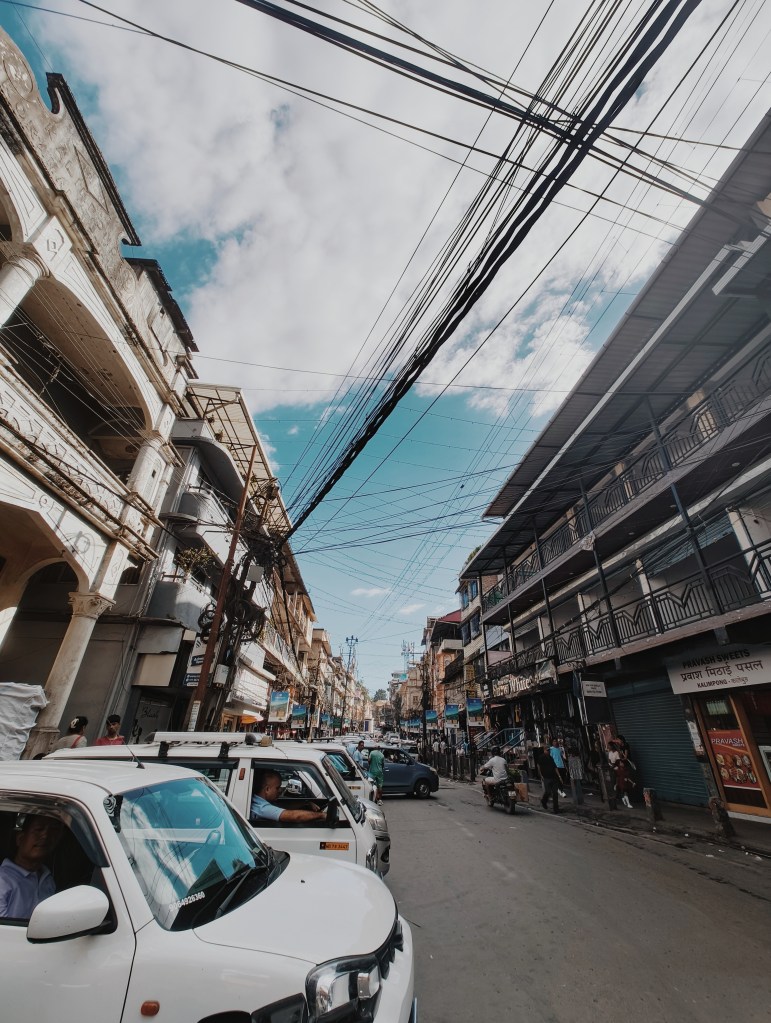
And yet, despite years of movements and political unrest, Kalimpong still feels magical. The town remains wrapped in nostalgia. Early mornings still echo with the soft chants of “Om Mani Padme Hum,” carrying me back to childhood. The villages feel unchanged, steady in their rhythm, untouched by the noise beyond.
There is irony in facing an identity crisis while being deeply patriotic. Nepali-speaking Indian Gorkhas are sometimes labelled as “foreigners,” yet our love for the nation is unwavering. Kalimpong, often called the “Second Delhi of India,” reflects this spirit most powerfully during Independence Day.
The celebrations here are not merely ceremonial, they are emotional. The two days of Independence day celebration only in India, first on 15th August, the town comes alive with all the School student’s parade at Mela Ground, inter-school and club football matches, and a vibrant sense of unity. On 16th August, inter-school band displays fill the air with music and pride and with football matches. I once marched in those bands myself, and the memory still stirs something deep within me. It is not just participation; it is belonging.
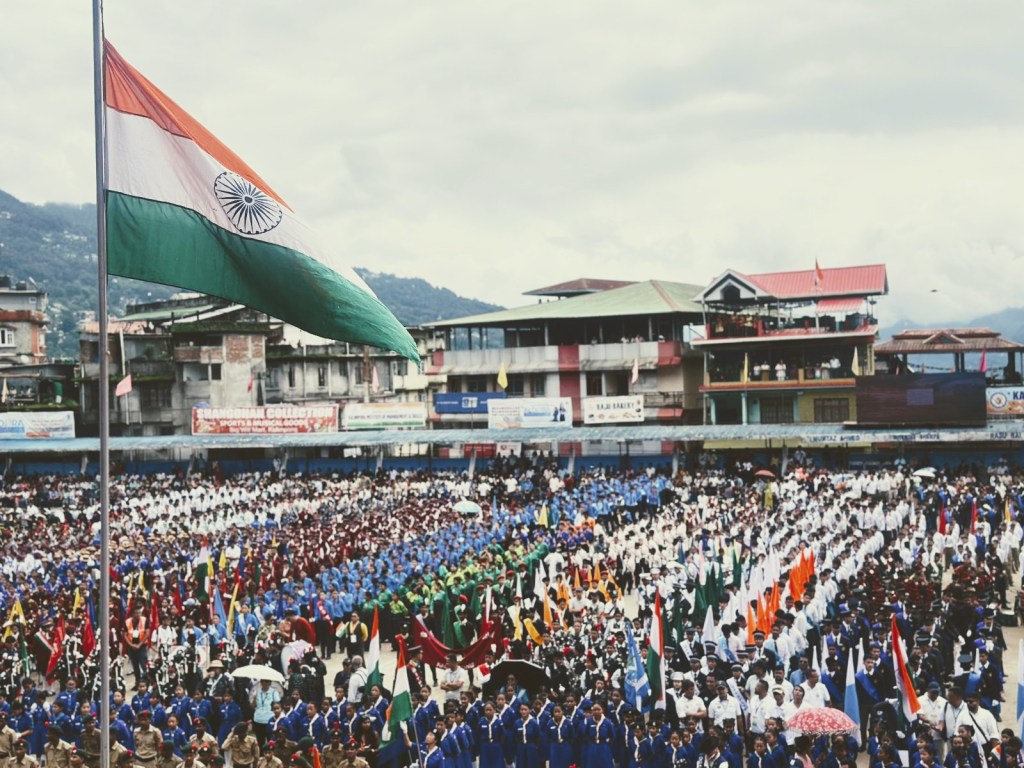
Photograph by the author.
Other states have grand cultural festivals-like the Hornbill Festival in Nagaland or Maghe Mela in Jorthang, Sikkim – and they are celebrated with pride and beauty. But in Kalimpong, Independence Day itself also becomes a festival. It is our declaration – not just of national freedom, but of identity, loyalty, and place.
In the end, the hills teach us something quiet yet powerful: we do not need to shout to belong. But sometimes, we must speak – so that our belonging is understood.
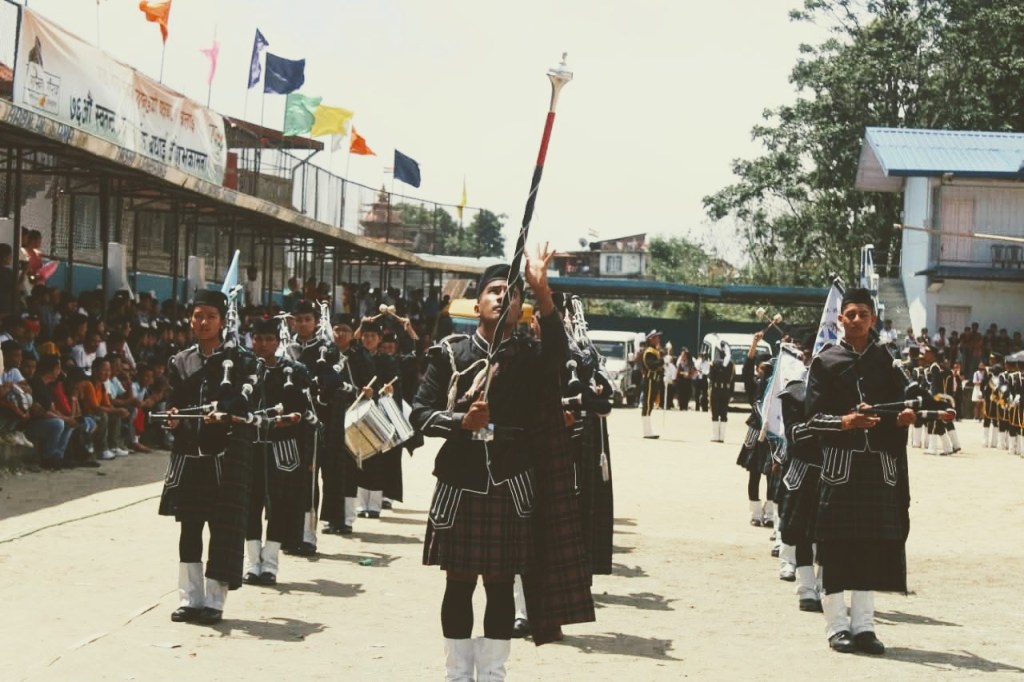
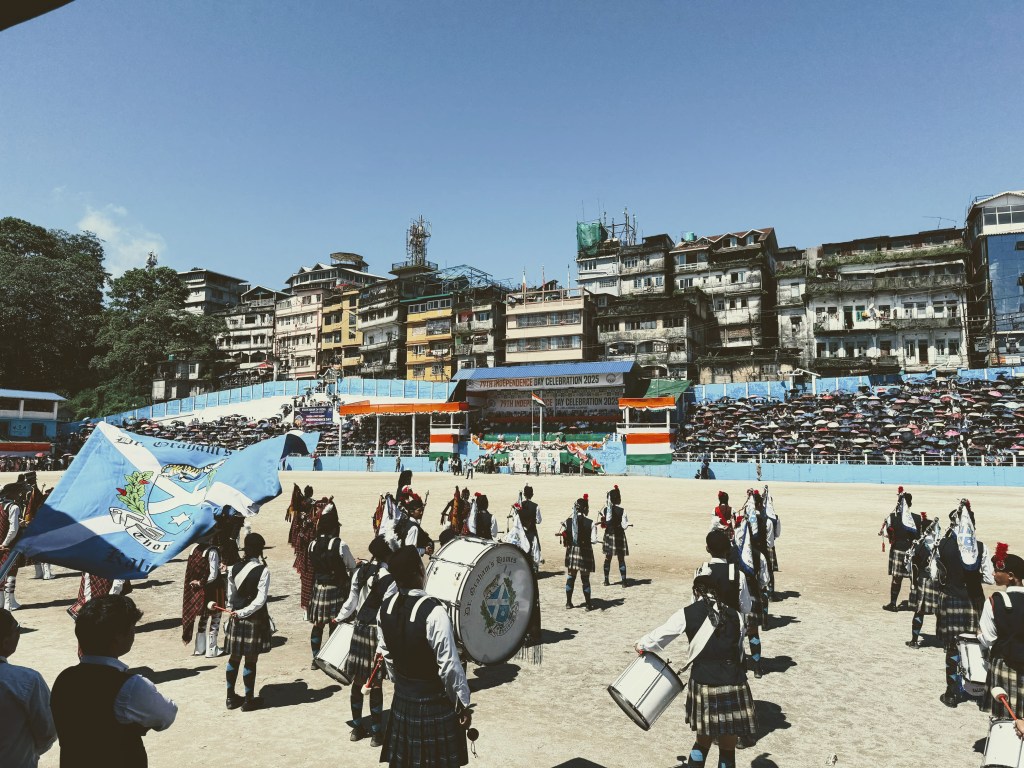
Kalimpong is also home to institutions that quietly narrate its layered history – schools like the Universities Mission Institution, Dr. Graham’s Homes etc. These institutions are more than centres of education; they are living chapters of the town’s colonial past, cultural exchange, and intellectual growth. Counted among some of the most respected schools in the region, they reflect how Kalimpong has long been a meeting point of tradition and modernity.
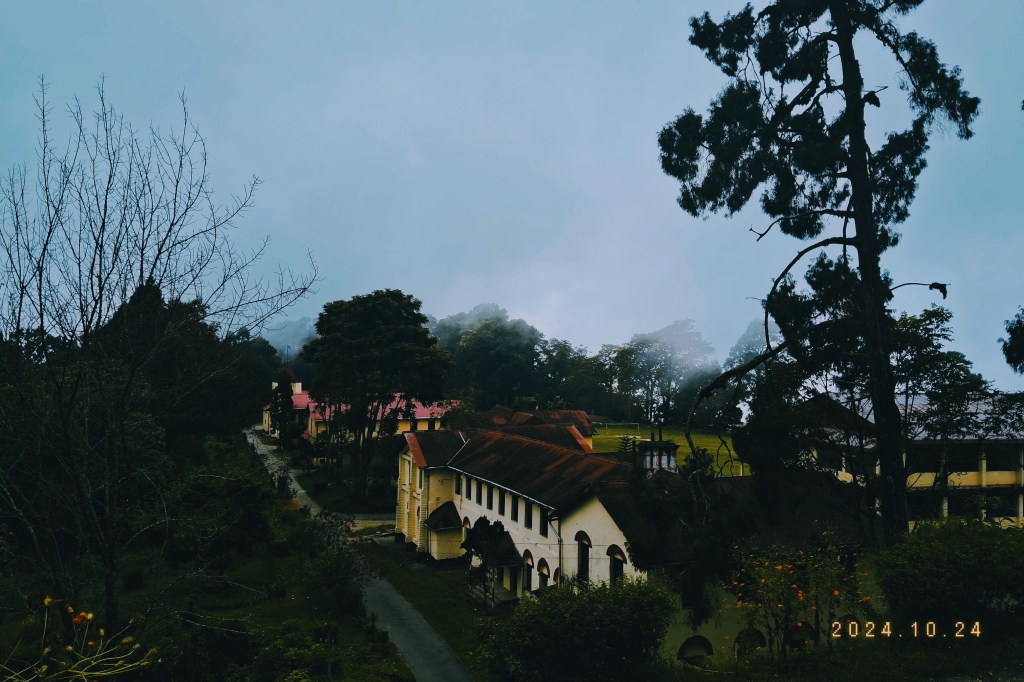
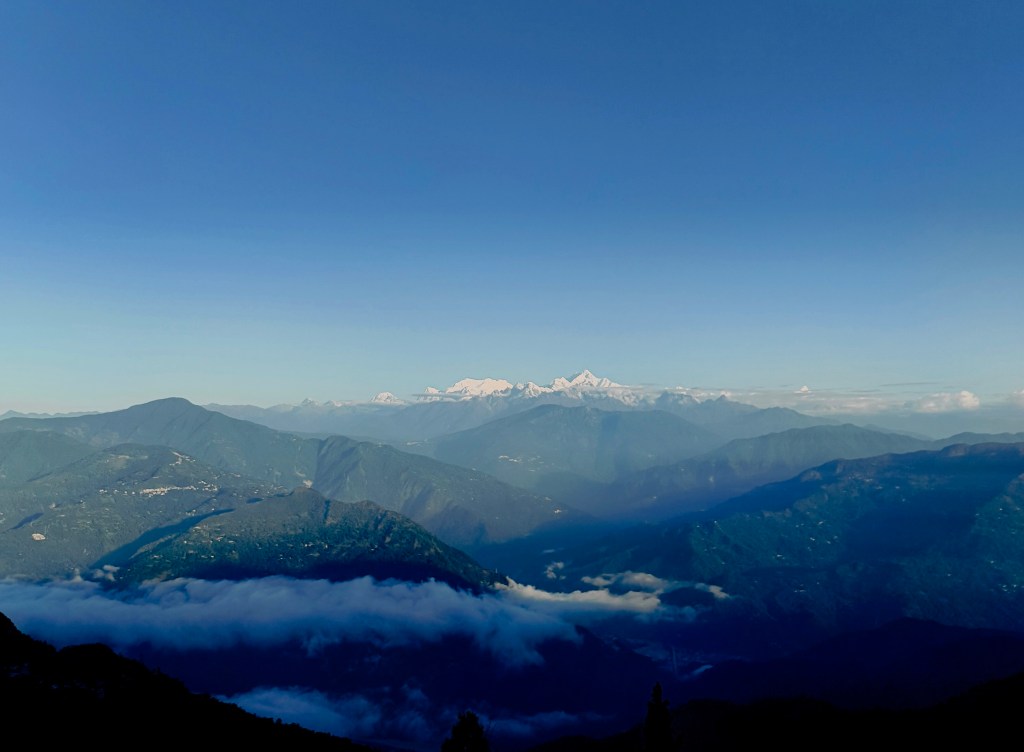
And yet, despite decades of agitations, political movements, and complex histories, Kalimpong and the greater Darjeeling hills continue to mirror the timeless beauty of the Himalayas. The region stands resilient – cradled by mist, blessed by the quiet generosity of Mother Nature, and strengthened by the spirit of its people.
The Kalimpong hills, and my village nestled within them, breathe a rare kind of beauty and tranquility. From the sweeping heights of Deolo Hill, where gliders soar with fearless grace across the open sky, to the serene slopes of Durpin Dara Hill, where monasteries shower silent blessings upon the people-every ridge carries both strength and serenity.
These hills may have witnessed chapters of bloodshed and agitation, echoes of unrest carried by the wind. Yet beyond those storms, the beauty and benediction of my hometown and village remain eternal. Time may pass, movements may rise and fade, but the spirit of the hills endures-calm, dignified, and forever home.
I want to conclude by sharing a poem which resonates with this essay about my place and my Village “Kalimpong”
In the mountains with peace,
There is a place called Kalimpong,
Where the trade finally cease,
With nature’s beauty on lease.
There is a place called Kalimpong,
Where the traveler resides,
There is a place called Kalimpong,
Where the goddess resides.
The place shaped like a forehead,
With the name as kaflibung,
And living life like a plant,
With a name as kundebung,
Therefore, it blends with culture,
It is a place called kalimpong,
Rushing of the Teesta River,
Blessings to the hills it brings,
A message from nature, it delivers,
To save our hills, the river sings.
Up at Delo Hill,
Where gliders vanquish fear,
Then, there on Durpin Hill,
With monasteries, where wisdom steers.
When August arrives,
All eyes dive with delight,
At the mela ground,
Where the spirit of football revives.
Celebration of freedom,
At mela ground of kalimpong,
Where the tricolour blends,
With every patriotism,along,
the love from the people of kalimpong,
Piping hot fambi at streets,
A cutting tea from Narayan das,
All the foods it beats,
Love from people delivers, at last ,
Kanchan hall standing with heritage,
With every memories of cinema in cage,
Evey life of 90s traveling in voyage,
Now only memories stays in page,
With the whistle at Damber Chowk,
The traffic stops,
With the crowd at CK Chowk,
The traffic clogs.
Waiting at Syndicate,
For the vehicle to arrive,
Perhaps it was fate,
For it to arrive.
