By Tanzin Tsokit
Read moreWhispers from the Hills: A Memoir of Kalimpong
By Riwaj Roka (Kalimpong, India)
Read moreAppearance of the Tibetan flag in “Sadda haq”
Written by Lungmying Lepcha
A brief analysis of the appearance of the Tibetan national flag in the song “Sadda Haq”.
Rockstar by Imtiaz Ali still remains a classic amongst all the cinephiles. We declare it the Indian or rather better version of Romeo and Juliet .
Read moreA visit to Tashiding in 2022.
-Written by Rinchen Angmo
It’s been two years since my visit to Tashiding in Sikkim. Everytime I look back to that day, I feel grateful. And every now and then it’s important to reflect on all that one is grateful for.
Tashiding hill was visited and blessed by Guru Rinpoche in the 8th century A.D. The monastery itself was built on the site around the 17th century A.D. according to a few sources. Perched on a hilltop, Tashiding monastery is a blessed treasure. The road goes upto a certain extent, after which one has to walk on a beautiful stepped path leading to the monastery. On the day I visited, the sky was clear and beautiful. We made our prayers at the various lakhangs. Then, one of the monks conducted prayers for us and then we made kora (circumambulations) around the monastery premises. We also paid our respects to the rock where Yeshe Tsogyal, one of Guru Rinpoche’s primary students, had meditated.
Read moreNas, the root of my food associated existence.
Written by Rinchen Angmo
Nas, the food associated root of my existence. The Ladakhi word for barley is nas. For centuries, the people of Ladakh, Tibet, Spiti, Lahaul and various places across the Trans-Himalayas have cultivated barley. In most parts of the aforementioned places, a barley based dish called kholak/tsampa has from time immemorial been a staple diet.
Though I don’t eat kholak as often as I would like to, the dish inevitably becomes a symbol of the root of my food associated existence. I say food associated specifically, because there are various other ways of quantifying roots of existence in different tangible and philosophical spheres.

Chil-shru: A story of five birds
Written by Nawang Chhoetso
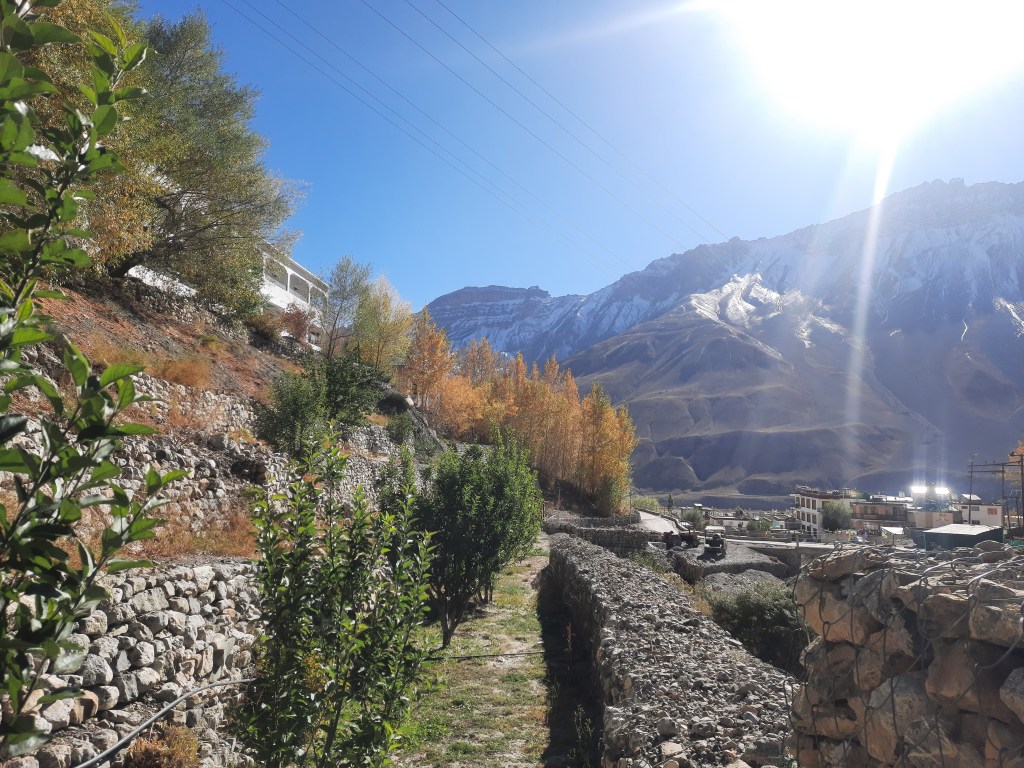
A folktale from Spiti.
As I recall, it’s a story of five birds. But a friend of mine insisted that there were more than five birds, however even she wasn’t clear about the details. So this story will be about the tale of 5 birds.
Like all other folktales from Spiti, this too starts with the sentence ” yoyo metuk”- I don’t know what this means but every folktale starts with this sentence followed by “yul jaga chenmo na” -( in a big village). And then the story follows.
Read moreA book review of ‘Tibetan Caravans’ by Abdul Wahid Radhu.
Written by Rinchen Angmo.
‘Tibetan Caravans’ is a book by Abdul Wahid Radhu le from Ladakh. Reading Wahid le’s book made me realize the importance of recording one’s life accounts for future generations. Since ‘History’ is often manipulated by various powers, individual stories become increasingly important. After all, it is through these individual stories that one gets a glimpse into a world that would otherwise have been forgotten, fabricated or made foreign.
Wahid le’s book assumes great significance in terms of documenting the waning days of trans-Himalayan trade as well as eye-witness accounts of the systemic attempt of the destruction of Tibetan culture and Tibetan Buddhism by the Communist Party of China in its early days of occupation. Moreover, it provides a glimpse of life in the trans-Himalayas before ‘modernization’ reached its doors.
Read moreGuru Rinpoche’s Lake.
-Written by Rinchen Angmo
It’s been more than a year. Last year around March, I made a pilgrimage to Tso Pema, tso meaning lake and pema meaning lotus; I will refer to the holy lake as Tso. Tso Pema is located in Rewalsar, Himachal Pradesh, India. For followers of Vajrayana Buddhism, Tso is a very holy site associated with Guru Rinpoche.
How do I describe the serenity of Tso? There is a sense of blessedness at Tso that escapes description. The jade green lake, the deep green trees and the pilgrims circumambulating around the holy lake, fill the air with a sense of serene jubilation.
Read moreKache community of Tibet
By Sonam Chhomo
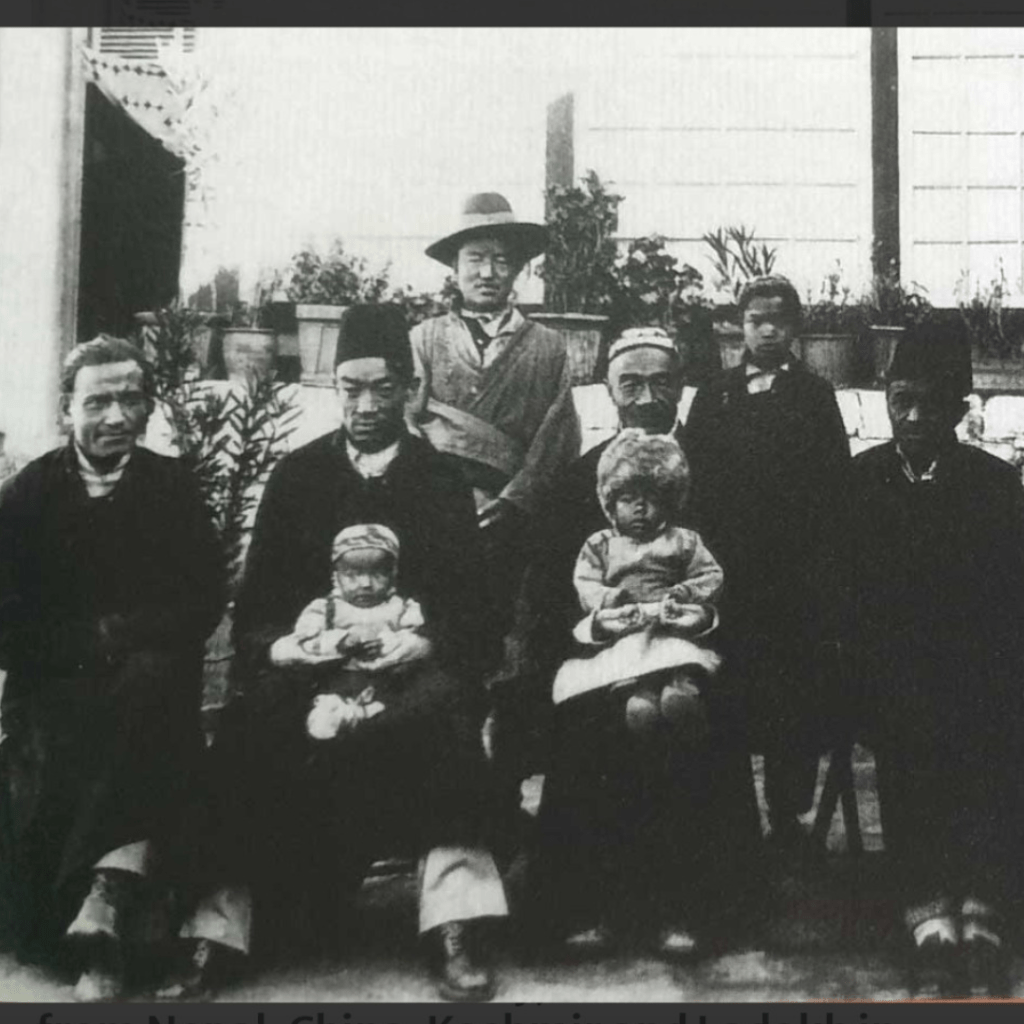
Tibetan Muslims were known as the Kache community in Tibet wherein Kache is a word derived from Kashmir. Kache community come from Kashmiri or Turkic descent through patrilineal lineage. They married Tibetan women when they settled in Tibet which later formed the genesis of intercultural religiosity of the Kache community. According to David Atwill, in the pre-twentieth century context of Tibet, Kache in Tibetan could simply refer to those who practiced Islam without a necessary ethnic affliliation.
Read moreA layman’s reflections on ‘A Guide to the Bodhisattva’s Way of Life’ by Shantideva.
by Rinchen Angmo
Having had the good fortune to receive His Holiness The Dalai Lama’s teachings on ‘A Guide to the Bodhisattva’s Way of Life’ by Shantideva at Jiwestal (in Ladakh) amidst thousands of other devotees, I set out to read the book myself. I was stunned by the poetic beauty and simplicity of the teachings in the book by Shantideva.
One is not supposed to teach Dharma unless one has reached a certain level; so this article is in no way an instruction, but a mere layman’s appreciation of the book written by a great Buddhist master.
Read moreAn old photograph
A Photo Essay
Written by Sonam Chhomo

The History of Bodyig (Tibetan script) and its current state in different regions.
Written by Rinchen Angmo.
The Bodyig script was created owing to the vision and foresight of one of the greatest Tibetan Kings, Chogyal Songsten Gampo, the 7th century ruler of Tibet. The King realized that the advancing kingdom of Tibet would soon require its own script. Chogyal Songsten Gampo sent his intelligent minister Thonmi Sambhota to India with fifteen other young Tibetans so that they could learn Indian languages whereby they could develop a script for Tibet. On Thonmi Sambhota’s return from India, the Tibetan script was finalized.
Bodyig also known in some regions as Bodhik or Bhoti, is the script that became indigenous to Tibet, Ladakh, Lahaul (sTod valley), Spiti, Bhutan (Dzongkha), Baltistan, Sikkim (for Bhutias) and other regions. However, the usage of the script is slowly waning in many regions.
Read moreShey Shrubh Lha.
-Written by Rinchen.
My Abile(granny) said that today is Shey Shrubhlha: the day on which Shey’s protector deity Dorje Chenmo enters a human being in order to give advice to the village of Shey. The day of Shrubh lha also marks the beginning of harvest. I’m not exactly sure how this spans out these days and all that I know about how it spanned out back in my granny’s youth is stemming from bits of memories that my granny still holds. For those who don’t know, Shey, now a village, was once the summer capital of the Kingdom of Ladakh.
My granny said two of the things she remembers from this occasion is that on this day Dorje Chenmo using a human being as a medium visits the Shey Lonpo House ( one of the foremost erstwhile ministerial families in Ladakh during the King’s reign) and a traditional dance is held on the lawn before the Lha-khang (abode of the lha (deity), in this case Dorje Chenmo). Ofcourse, other important events also take place on this occasion, but these are the two which my grandmother recalls from personal experience.
A beautifully surreal month.
Written by Rinchen.
I would like to begin by thanking His Holiness The Dalai Lama for blessing and bringing so much joy to all the people of Ladakh. Chhaksal.
Each day of His Holiness’s presence in Ladakh has been filled with beauty and wonder for each and every Ladakhi in so many different ways. His Holiness’s interfaith visits, secular teachings, religious teachings, visits to Zanskar and Lingshed, and the various functions that were hosted in his honour, brought blessings upon and joy to a countless number of beings who had the sode and sonam (luck and merit) to be in His Holiness’s presence. We Ladakhis are truly honoured to have had His Holiness visit Ladakh as his first destination since the pandemic broke out.
We will miss all the beautiful moments that His Holiness’s visit brought and now look forward to His Holiness’s visit next year.
Read more