-Rinchen.
I read a beautiful article this morning in The Hindu’s Sunday Magazine. During the pandemic, I like many others, have found great solace not only in nature but also in learning about nature. The article’s author had written emphatically about planting the right kind of trees in the right region. The author also pointed out the harm of planting trees in areas that are not natural havens for trees: open natural ecosystems (ONEs); Ladakh being an ONE.
In recent years, Ladakh has witnessed various environmental measures, but do we understand whether they are ecologically sound? I for one, honestly don’t pretend to understand, but I do know that not everything that we think is good for nature is good for nature; that not so incidentally applies to our own well being as well.
That got me thinking about various environmental measures taken in Ladakh, specially with regard to water. While I do not understand much about the environment, I have always been wary of many environmental measures. Reading the article, in addition to the little observational knowledge I have gained by staying in my village (away from urban Leh), reinstated my doubts about the effect of the many well-intended environmental measures. I shall not name any, as I lack enough knowledge to criticize, but I do believe that besides the emphasis on novel environmental measures, we should embrace what we already have: a community that respects every sentient being and nature. Though, I appreciate the good intentions that individuals bear while embarking on environmental initiatives, I must do my bit to question prevalent notions, which might hopefully steer current environmental measures towards a more balanced approach.
There is not a single scrap of garbage as you walk around my village. Unlike people in Leh and others urban areas, the villagers here don’t have fancy degrees, but their values vis-à-vis the environment are far superior.
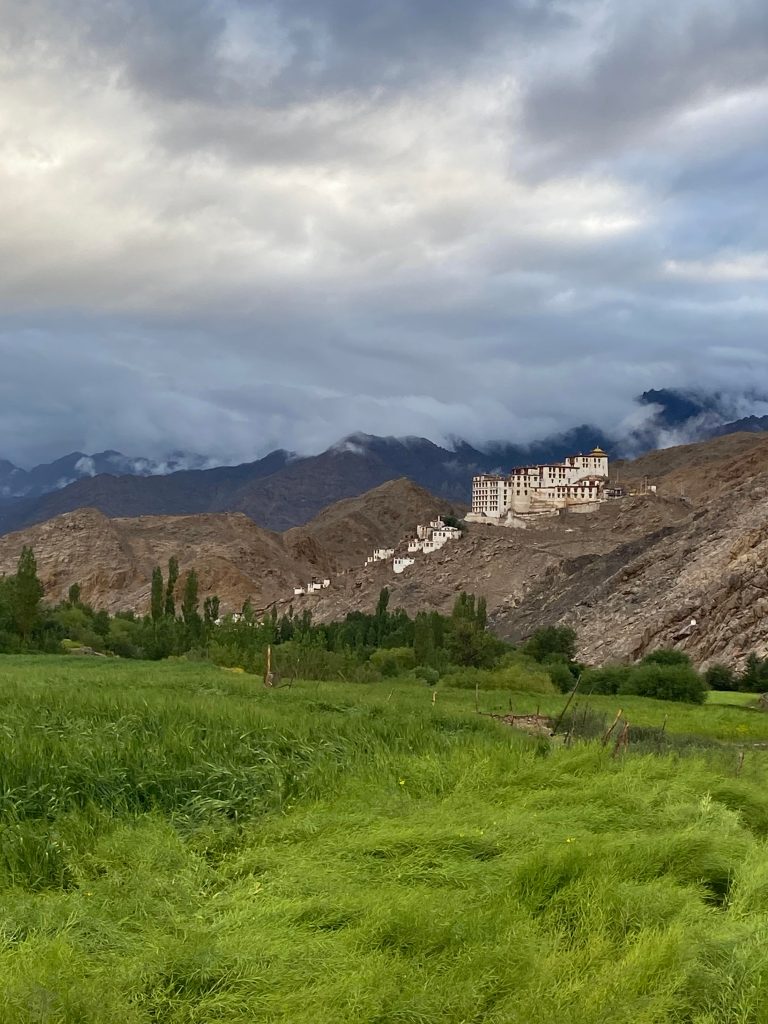
There is acute water scarcity in Chemrey, as in many other regions in Ladakh. This greatly adds to the woes of the villagers who depend on agriculture for a considerable portion of their incomes. Added to this are the difficulties of a short summer and less arable land. Though there are many skirmishes due to water, they stick honourably (for the most part) to the ancient system of chhure (traditional water distribution system). All are informed about the days on which their fields will receive water and the channels are managed accordingly. As opposed to people who have the time to debate on the effects of hard or soft water on their hair, the villagers here are content with the tedious yet impeccable water system. Yet when you witness the green fields amidst the trans-Himalayas, you’d never imagine that this is a village with water scarcity. That makes one think of how they must toil to make their crops green; surely a feat in a trans-Himalayan cold desert.
The villagers here know little about ‘sustainability’, but they needn’t ‘know’, when they live that reality. Despite the changes brought through western influence in urban capitals like Leh, the villagers here are true to what they’ve known: to be one with nature without viewing that as a novelty.
This I think has a great effect on their personalities, as I have found them to be rather authentic individuals. ‘Authentic’ is subject to subjectivity, but I guess what I mean is an effortless way of holding one’s own.
