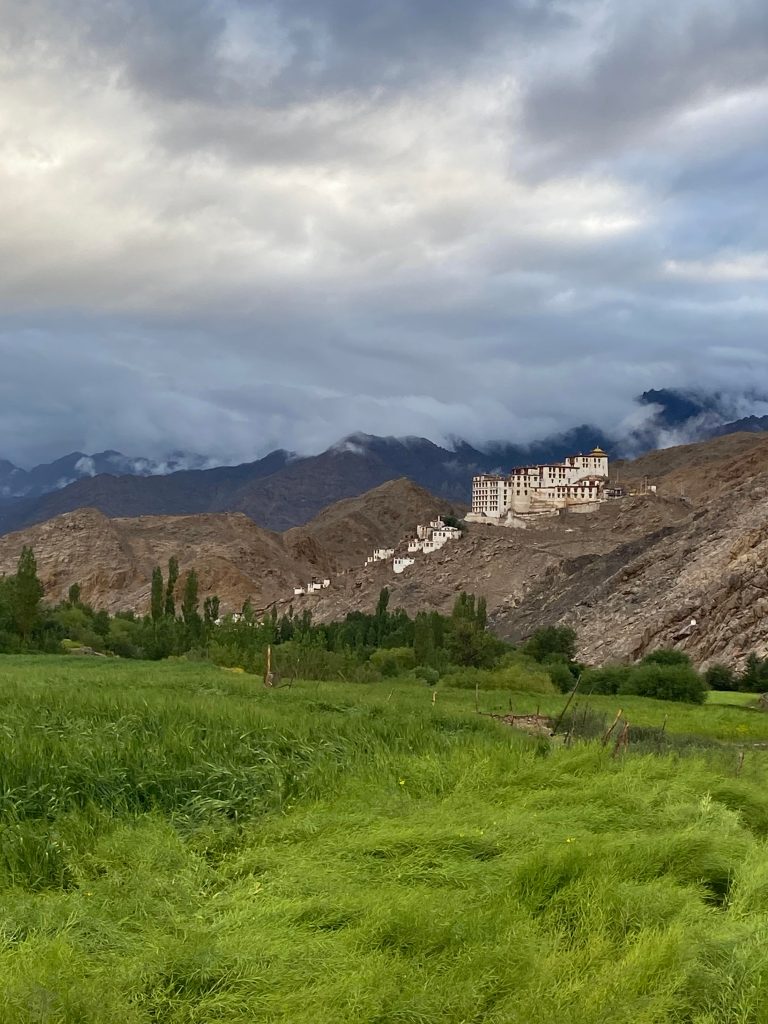
How Lippa celebrates Losar

Written and photographed by Karma Negi.

Losar is the new year celebration in most parts of Kinnaur and Himalayan regions where there is an influence of Himalayan Buddhism. Losar breaks up into two words ‘Lo’ (Year) and ‘Sar’ (New). Every year it is celebrated according to the Tibetan calendar so it doesn’t fall on the 1st of January. The dates vary even amongst the regions that celebrate Losar.

In Kinnaur region, the Losar of Lippa is the most famous one; this year their losar was celebrated from 24th to 26th December. People from nearby places come to enjoy the three-day grand celebrations. Lippa is one of the biggest villages of Kinnaur. While travelling, we have to take a diversion from Akpa or Kiran Nallah on the National Highway 505. The village is a bit remote and reaching there is a task. The whole village is situated on a steep mountain, with a river flowing right below the village.

Lippa,Kinnaur
Read more

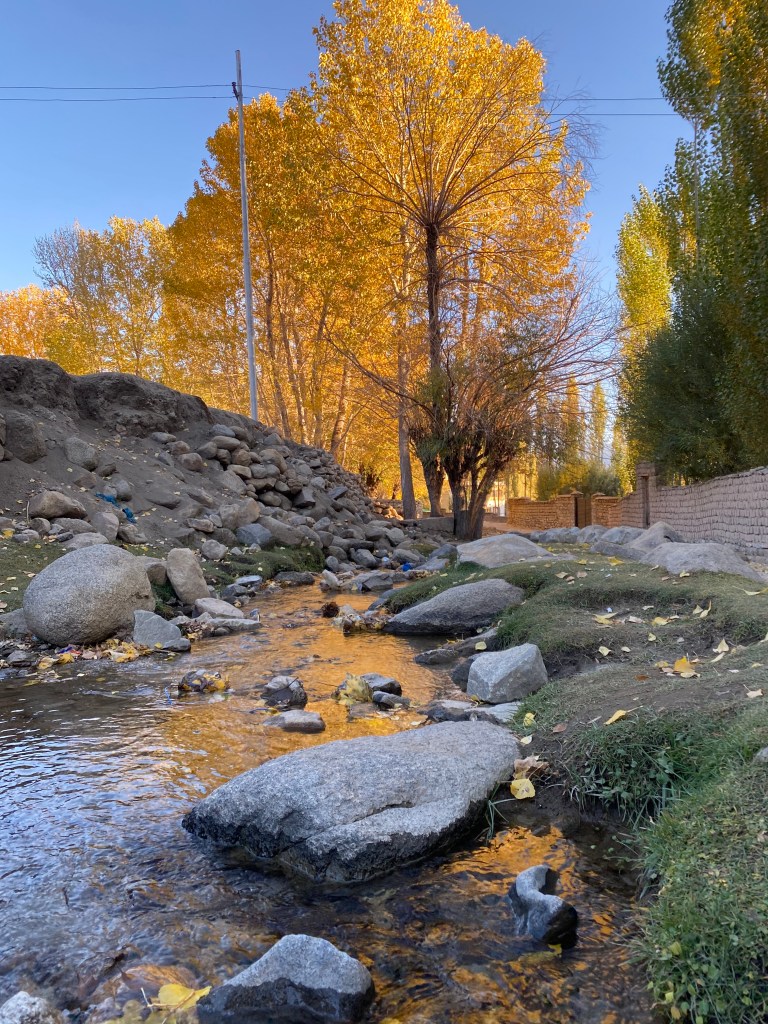
Ought to know something about autumn, ya?

-Written and photographed by Rinchen Angmo

Seasons, they come and go, just like the thoughts in my mind. Even feelings come and go, but they stay a while longer than thoughts do. Yellow leaves, do they make me think of different songs?

Somehow even when I’m not in my homeland, my mind invariably registers different months vis-à-vis the seasons of my homeland. May, there will be apricot blossoms in Ladakh; June, the weather in Ladakh will be pleasant; October, the leaves will turn yellow; December, it will be very cold in Ladakh. That’s why no matter where I am, my mind always understands different months through the lens of the different seasons of Ladakh. 

Read more

A book review of ‘Tibetan Caravans’ by Abdul Wahid Radhu.

Written by Rinchen Angmo.

‘Tibetan Caravans’ is a book by Abdul Wahid Radhu le from Ladakh. Reading Wahid le’s book made me realize the importance of recording one’s life accounts for future generations. Since ‘History’ is often manipulated by various powers, individual stories become increasingly important. After all, it is through these individual stories that one gets a glimpse into a world that would otherwise have been forgotten, fabricated or made foreign.

Wahid le’s book assumes great significance in terms of documenting the waning days of trans-Himalayan trade as well as eye-witness accounts of the systemic attempt of the destruction of Tibetan culture and Tibetan Buddhism by the Communist Party of China in its early days of occupation. Moreover, it provides a glimpse of life in the trans-Himalayas before ‘modernization’ reached its doors.

Read more

Holding one’s own in rural Ladakh.

-Rinchen.

Chemrey.

I read a beautiful article this morning in The Hindu’s Sunday Magazine. During the pandemic, I like many others, have found great solace not only in nature but also in learning about nature. The article’s author had written emphatically about planting the right kind of trees in the right region. The author also pointed out the harm of planting trees in areas that are not natural havens for trees: open natural ecosystems (ONEs); Ladakh being an ONE. 

In recent years, Ladakh has witnessed various environmental measures, but do we understand whether they are ecologically sound? I for one, honestly don’t pretend to understand, but I do know that not everything that we think is good for nature is good for nature; that not so incidentally applies to our own well being as well. 

Read more