Written by Tenzin Chonyi
Read moreAppearance of the Tibetan flag in “Sadda haq”
Written by Lungmying Lepcha
A brief analysis of the appearance of the Tibetan national flag in the song “Sadda Haq”.
Rockstar by Imtiaz Ali still remains a classic amongst all the cinephiles. We declare it the Indian or rather better version of Romeo and Juliet .
Read moreNas, the root of my food associated existence.
Written by Rinchen Angmo
Nas, the food associated root of my existence. The Ladakhi word for barley is nas. For centuries, the people of Ladakh, Tibet, Spiti, Lahaul and various places across the Trans-Himalayas have cultivated barley. In most parts of the aforementioned places, a barley based dish called kholak/tsampa has from time immemorial been a staple diet.
Though I don’t eat kholak as often as I would like to, the dish inevitably becomes a symbol of the root of my food associated existence. I say food associated specifically, because there are various other ways of quantifying roots of existence in different tangible and philosophical spheres.

A book review of ‘Tibetan Caravans’ by Abdul Wahid Radhu.
Written by Rinchen Angmo.
‘Tibetan Caravans’ is a book by Abdul Wahid Radhu le from Ladakh. Reading Wahid le’s book made me realize the importance of recording one’s life accounts for future generations. Since ‘History’ is often manipulated by various powers, individual stories become increasingly important. After all, it is through these individual stories that one gets a glimpse into a world that would otherwise have been forgotten, fabricated or made foreign.
Wahid le’s book assumes great significance in terms of documenting the waning days of trans-Himalayan trade as well as eye-witness accounts of the systemic attempt of the destruction of Tibetan culture and Tibetan Buddhism by the Communist Party of China in its early days of occupation. Moreover, it provides a glimpse of life in the trans-Himalayas before ‘modernization’ reached its doors.
Read moreLong live His Holiness the Dalai Lama.
written by Rinchen Angmo
It is very disturbing to witness how manipulative media houses and ignorant people have the audacity to try defame His Holiness the Dalia Lama who has dedicated every moment of his life for the well being of sentient beings. It is to challenge this audacity that I feel compelled to write this. For too long we have let hegemonic forces spew venom, it’s high time we put an end to contrived narratives that deliberately spread hate.
Before I proceed I want to put forth some questions: Do you know what enlightenment means? Do you understand Buddhism? Do you understand the practices of Tibetan Buddhism? Do you understand what it means to perceive reality beyond duality? Do you understand what blessings mean? Do you understand the real meaning of compassion? Do you understand Tibetan culture? Do you understand that when one prostrates before statues it symbolizes the offering of body, speech and mind? Do understand the symbolic meaning of offering body, speech and mind? Do you understand the meaning of emptiness? Do you understand what it means to dedicate not just one, but several lifetimes for the well-being of other sentient beings?
Read moreRemembering Adhe Tapontsang la: ‘ The Voice that Remembers’.
-Rinchen Angmo
‘The Voice that Remembers’ is a book by the late Adhe Tapontsang la as told to Joy Blakeslee. Adhe la’s account of how the Communist Party of China forcefully occupied Tibet, is eye opening to say the least. Like many Tibetans, Adhe la stood against Chinese occupation and participated in the freedom struggles waged in Kham (in eastern Tibet). Consequently, she was imprisoned for 27 years. Throughout those 27 years she was subjected to physical, sexual and mental abuse by prison officials under the Communist Party of China. Through her book, she recounts not only her own struggles, but also that of millions of Tibetans who perished under the Communist Party of China. Unfortunately, this brutal occupation continues till date and even as we speak many Tibetan political prisoners continue to face inexplicable tortures in the Communist Party of China’s prisons.
Read moreKache community of Tibet
By Sonam Chhomo
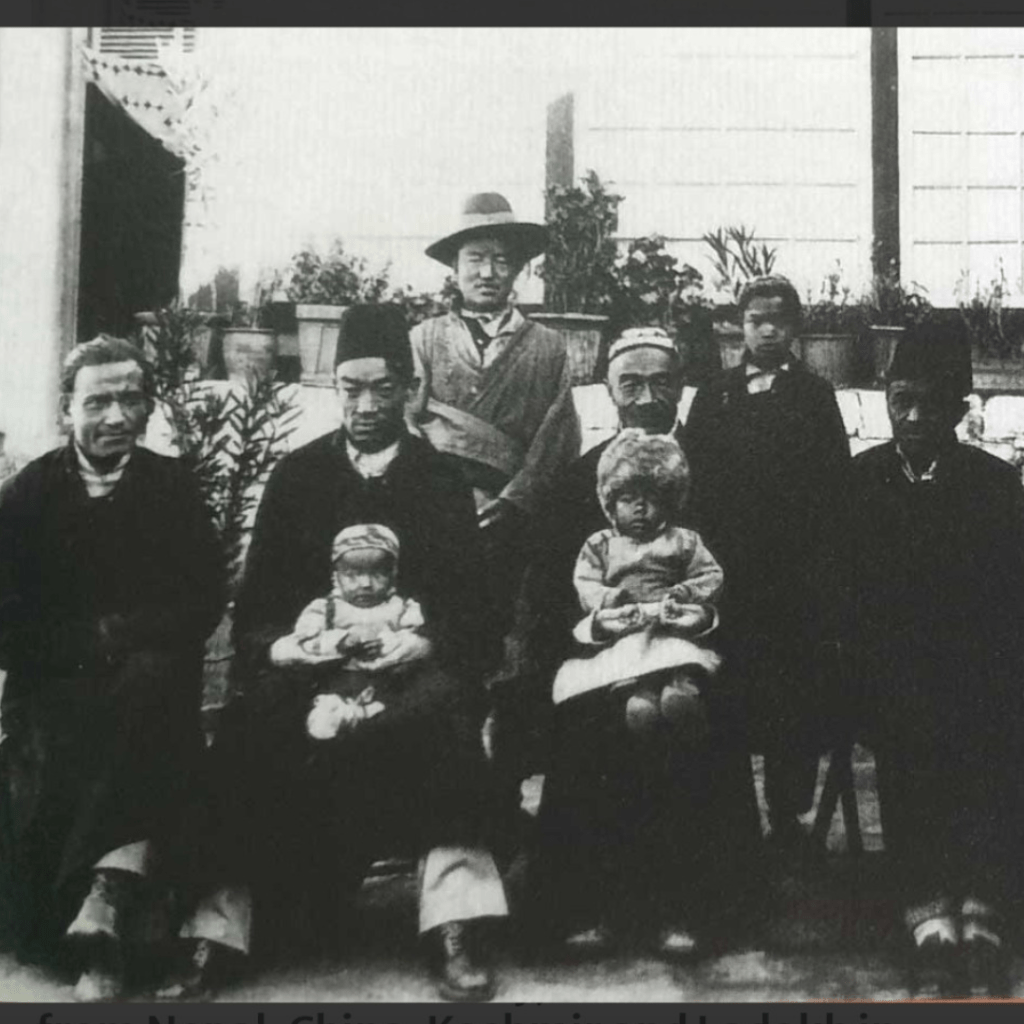
Tibetan Muslims were known as the Kache community in Tibet wherein Kache is a word derived from Kashmir. Kache community come from Kashmiri or Turkic descent through patrilineal lineage. They married Tibetan women when they settled in Tibet which later formed the genesis of intercultural religiosity of the Kache community. According to David Atwill, in the pre-twentieth century context of Tibet, Kache in Tibetan could simply refer to those who practiced Islam without a necessary ethnic affliliation.
Read moreThe History of Bodyig (Tibetan script) and its current state in different regions.
Written by Rinchen Angmo.
The Bodyig script was created owing to the vision and foresight of one of the greatest Tibetan Kings, Chogyal Songsten Gampo, the 7th century ruler of Tibet. The King realized that the advancing kingdom of Tibet would soon require its own script. Chogyal Songsten Gampo sent his intelligent minister Thonmi Sambhota to India with fifteen other young Tibetans so that they could learn Indian languages whereby they could develop a script for Tibet. On Thonmi Sambhota’s return from India, the Tibetan script was finalized.
Bodyig also known in some regions as Bodhik or Bhoti, is the script that became indigenous to Tibet, Ladakh, Lahaul (sTod valley), Spiti, Bhutan (Dzongkha), Baltistan, Sikkim (for Bhutias) and other regions. However, the usage of the script is slowly waning in many regions.
Read more