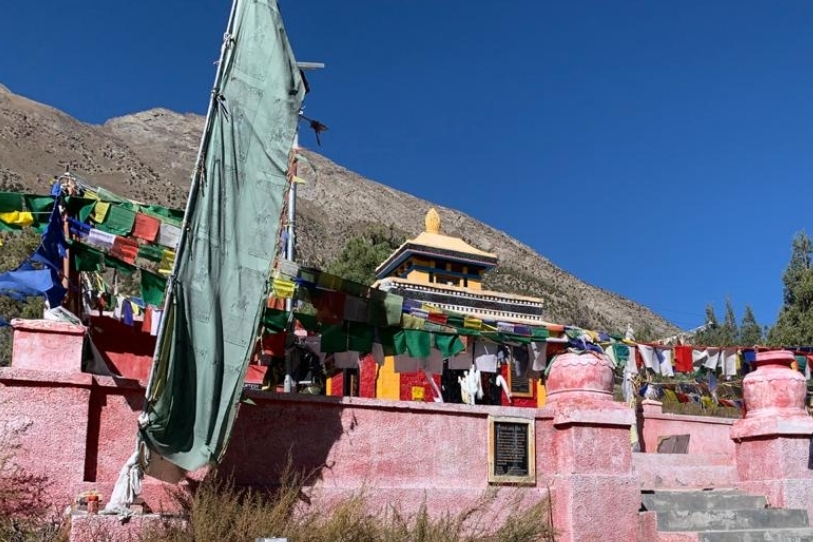
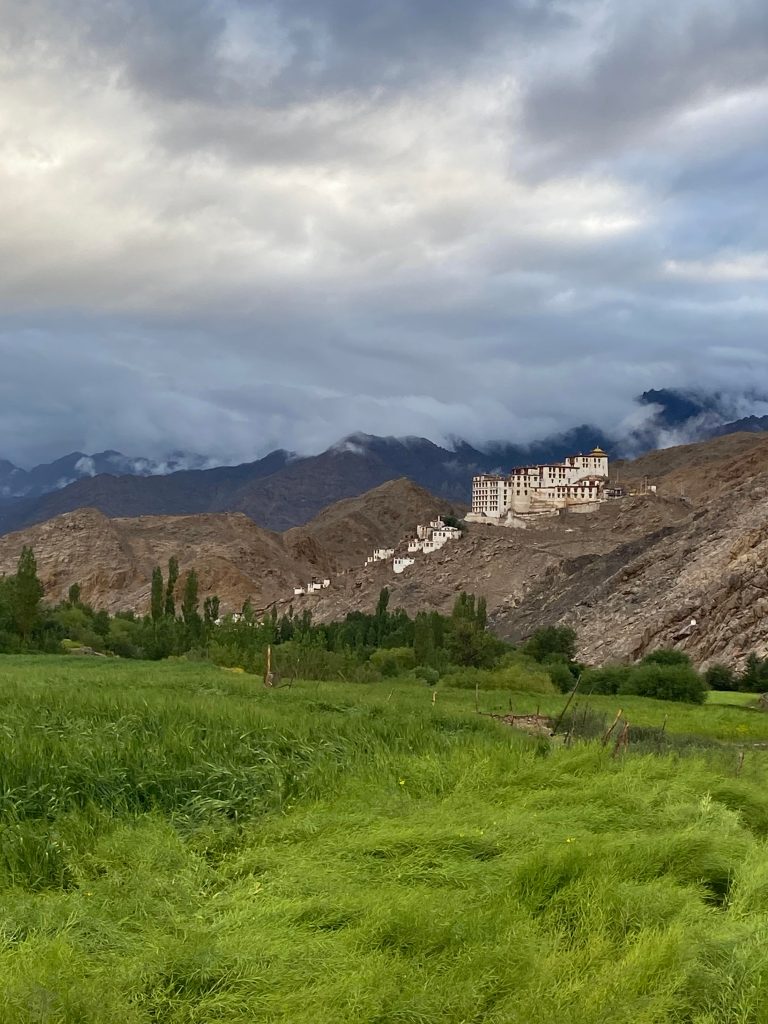
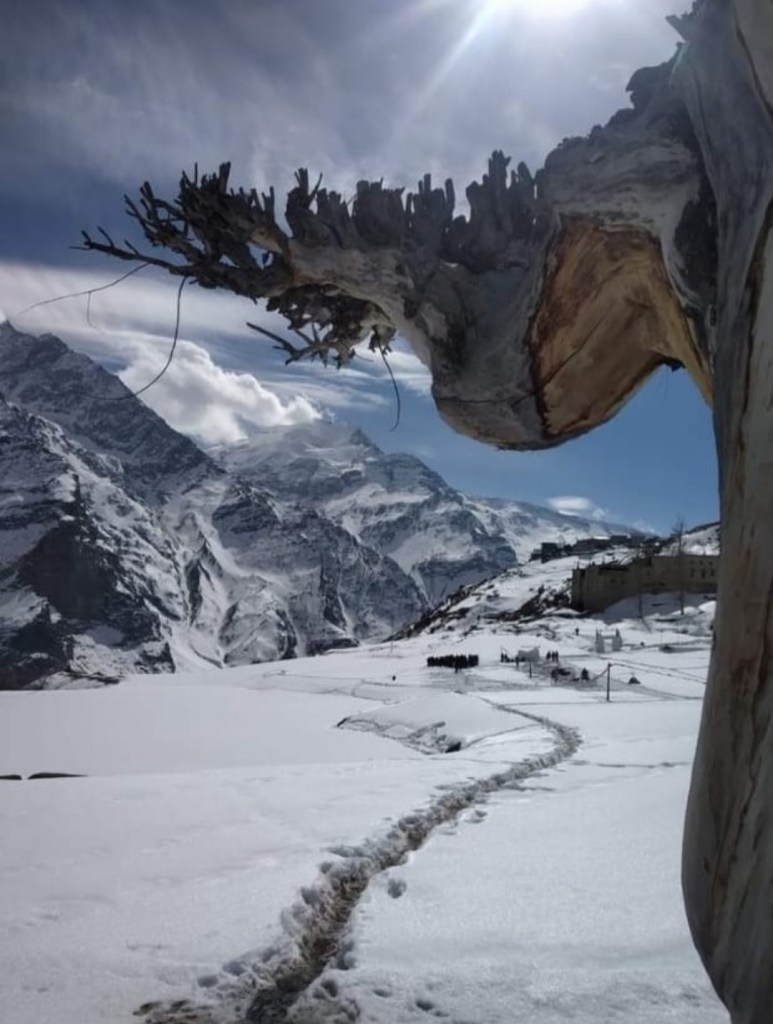
The experience of visiting places you always wanted to see for yourself is ethereal. The journey to this shungma felt almost as if I had been divinely allowed to enter its doorstep after many years of waiting for the perfect opportunity to unfold. As a child, I resisted visiting places at high altitudes because Lahaul was/is not a weather friendly place especially during the winter months. Even this time (it happened after a day), my ears remained blocked and my body felt uncomfortable for about two days.
But this year I felt as if I accomplished something.
I read a beautiful article this morning in The Hindu’s Sunday Magazine. During the pandemic, I like many others, have found great solace not only in nature but also in learning about nature. The article’s author had written emphatically about planting the right kind of trees in the right region. The author also pointed out the harm of planting trees in areas that are not natural havens for trees: open natural ecosystems (ONEs); Ladakh being an ONE.
In recent years, Ladakh has witnessed various environmental measures, but do we understand whether they are ecologically sound? I for one, honestly don’t pretend to understand, but I do know that not everything that we think is good for nature is good for nature; that not so incidentally applies to our own well being as well.
Khangzar Khar, Lahaul valley, Picture credits: unknown person from Lahaul.
Khangzar palace or locally known as the Khangzar Khar is the only palace which exists in the sTod valley (the upper valley of Lahaul valley). It was the home of the Jo/Thakurs/Wazir of Khangzar and the birthplace of Queen mother of Ladakh, Rani Parvati Devi Deskit Wangmo.
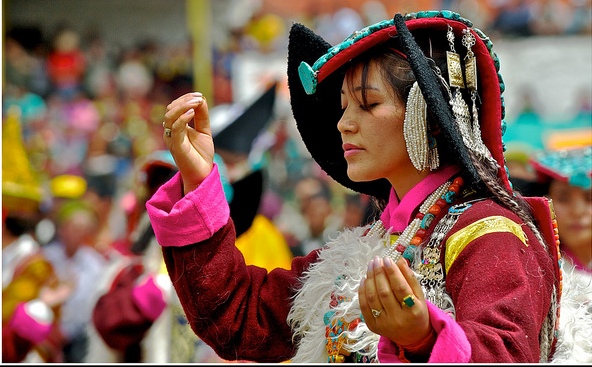
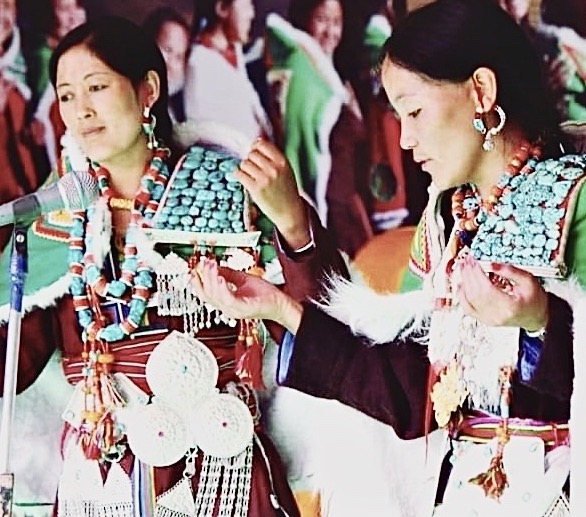
Yesterday the villagers of sTod valley (the upper valley of Lahaul valley) celebrated the Chodpa festival at the Khar where the villagers gathered and paid respect to the local Gods.
Lahaul has been the centre of two flourishing Kingdoms- the Ladakh kingdom in the north and north-west and later the Kullu and Chamba kingdoms in the south and south-west, overtime giving the people a space to form their amalgamated version of local cultures. The exact history of these regions, as Nawang states in the earlier essay, is difficult to establish pertaining to the lack of efforts in documentation in these regions. Similarly, Lahaul in the eyes of a tourist is seen as one combined valley but in reality is divided into different cultural zones within the same valley. Customs, traditions, Gods and even languages are separately defined for each valley within the entire Lahaul Valley.
As a child, the question of gender inequality was quite foreign to me. Of course, I was aware of differences, but never of inequality per se.
-Rinchen Angmo
Image courtesy: watsupptoday.com
I grew up in spaces that were owned either by my maternal grandmother or by my mother. I guess this statement needs a bit of a context. In Ladakh, the system of marriage is very flexible in terms of which household the bride or the bridegroom goes to; meaning, either the bridegroom could go to the bride’s house(makpa) or vice versa(pagma). ‘Going to’ the other’s house also means assuming more responsibility over that household than your own. Both in my maternal grandmother’s and my mother’s case the bridegroom had come to their house; consequently, they received an equal share of family property. This is a common phenomenon in Ladakh and has been followed from time immemorial. In fact, even the daughters or sons who depart to another household after marriage attain a small share of family property. Hence, in Ladakh, the question of whether or not a woman can own property figures as a redundant one. Why does owning property become so important one may ask.. When one sees one’s mother or grandmother as a figure who owns property, manages it with finesse, and goes unquestioned by society, one also understands that those constructs of a-woman-can’t-handle-‘manly’-responsibilities, are after-all ‘man’-made fallacies.
One thing that I find common in the women of my region Spiti, is that they have a choice and say in all aspects of life.
-Nawang Chhoetso
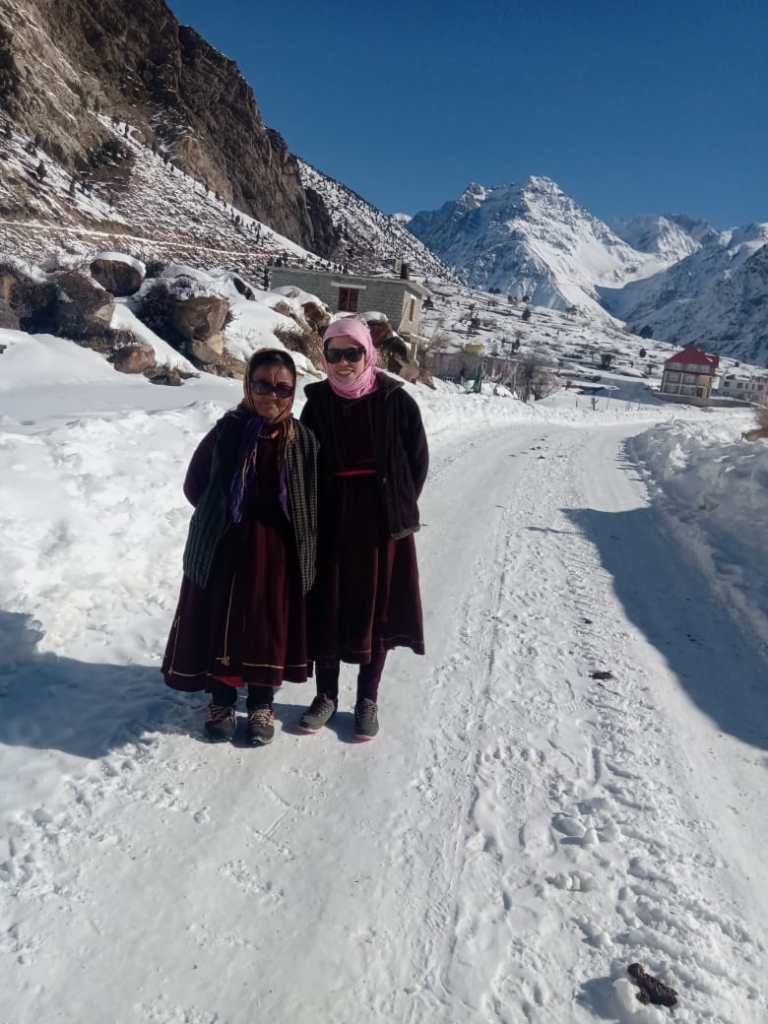
Spiti women
The older generation of women -from my grandmother’s age group- are primarily housewives. Their succeeding generation went on to expand their horizons by exploring various career opportunities. Hence, women of my mother’s age group engage in a diverse range of jobs and activities, as teachers, nurses and various other occupations. My generation has ahead us of us a greater number of options. But, what has remained constant for women from all three generations has been the right to make our own decisions.