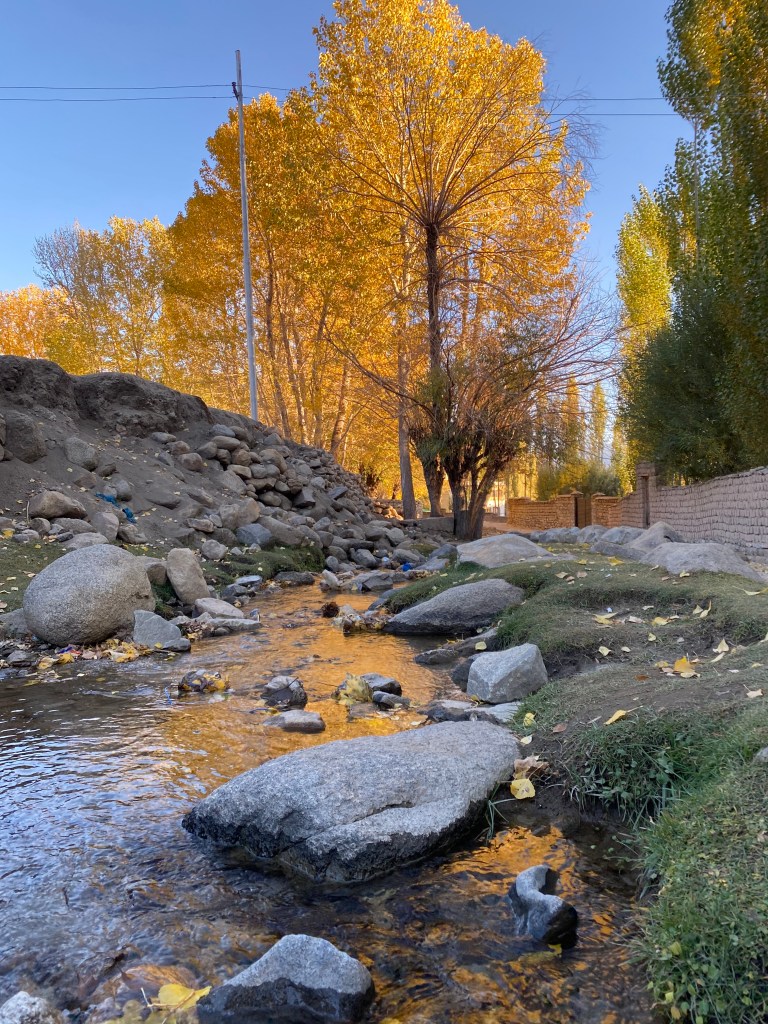
A bunch of yellow and listless leaves rustled in a small eddy by the closed door. The wind blew in a melancholic whirl, whistling in a doleful hum. Nine thirty-two in the morning, the house was still dimly lit, bereft of light; a thick overcast kept the sun away in its sombre folds.
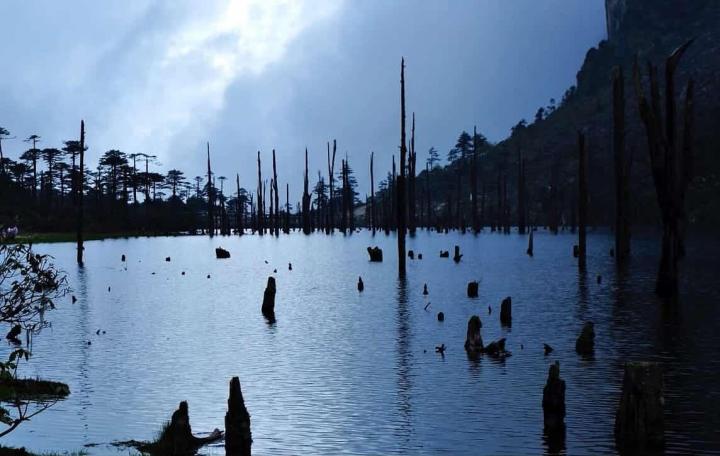
A midway capture, the wind along spirituality 3 june 2024Madhuri lake , officially known as Sangetsar Tso.Named after actress Madhuri Dixit due to a song filmed here for Koyla movie 3 june 2024Read more
In the early summer of 2018, right after I had finished my Class 12 CBSE Board exams, I went with my family to the village of Malana. When I recall this time, I instinctively tell people “We went on a spiritual tour, like a pilgrimage.” Hardly, anyone believes that a group consisting of me, my sister, my mother, uncle and aunt, my cousin, her husband and her two kids travelled and trekked to Malana to pay our respects to the local god Jamlu.
Pangong Tso is so much more than a water body, it is a living remnant of natural history.
Anyone who’s been to Pangong Tso will testify to it’s limitless beauty. Glittering amidst snow capped mountains, the water body is one of its kinds. Different hues of blue adorn it’s large expanse.
Pangong Tso is not only a beautiful water body but also a living remnant of natural history. According to geography, the Tethys sea was an ancient water body that existed in this part of the world. As the two continents collided to give rise to the Himalayas, the sea was subsumed, except some bits of it which remained as lakes. Other theories trace the origin of high altitude lakes to later tectonic activities. Either way, lakes like Pangong Tso in the Trans-Himalayas are living remnants of natural history.
Spid is the closest possible translation of spring in Ladakhi, yet the aura that the word carries is markedly different. The word spring has this feeling of freshness. Yet when I think of the word for spring in Ladakhi, that is spid, it reminds me of the windy days in April and of course apricot blossoms. According to my Abile (granny) spid aligns with the first three months of our traditional calendar. Typically, spid is characterised by strong winds known as spid lungs or spring winds. Hence, the Ladakhi image of spring is quite different from the one that is conjured by the English word.
It’s been two years since my visit to Tashiding in Sikkim. Everytime I look back to that day, I feel grateful. And every now and then it’s important to reflect on all that one is grateful for.
Tashiding hill was visited and blessed by Guru Rinpoche in the 8th century A.D. The monastery itself was built on the site around the 17th century A.D. according to a few sources. Perched on a hilltop, Tashiding monastery is a blessed treasure. The road goes upto a certain extent, after which one has to walk on a beautiful stepped path leading to the monastery. On the day I visited, the sky was clear and beautiful. We made our prayers at the various lakhangs. Then, one of the monks conducted prayers for us and then we made kora (circumambulations) around the monastery premises. We also paid our respects to the rock where Yeshe Tsogyal, one of Guru Rinpoche’s primary students, had meditated.
As I recall, it’s a story of five birds. But a friend of mine insisted that there were more than five birds, however even she wasn’t clear about the details. So this story will be about the tale of 5 birds.
Like all other folktales from Spiti, this too starts with the sentence ” yoyo metuk”- I don’t know what this means but every folktale starts with this sentence followed by “yul jaga chenmo na” -( in a big village). And then the story follows.
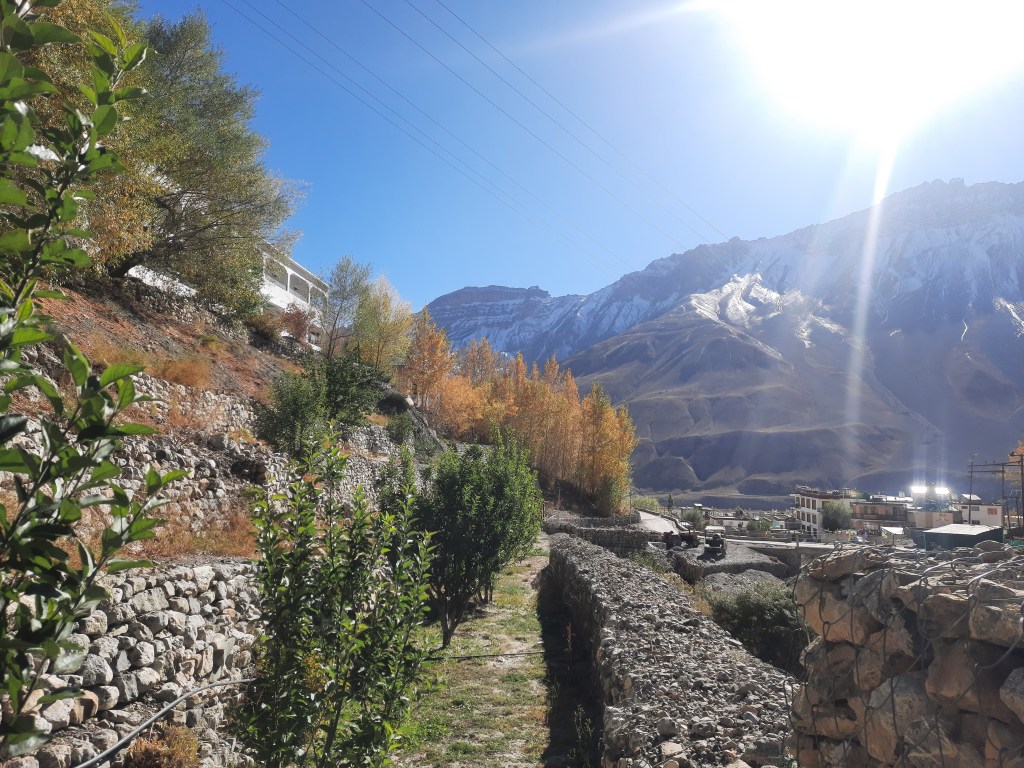
Seasons, they come and go, just like the thoughts in my mind. Even feelings come and go, but they stay a while longer than thoughts do. Yellow leaves, do they make me think of different songs?
Somehow even when I’m not in my homeland, my mind invariably registers different months vis-à-vis the seasons of my homeland. May, there will be apricot blossoms in Ladakh; June, the weather in Ladakh will be pleasant; October, the leaves will turn yellow; December, it will be very cold in Ladakh. That’s why no matter where I am, my mind always understands different months through the lens of the different seasons of Ladakh.
The pictures in this photo essay could possibly depict the myriad microcosms inhabited by different beings within the world of Leh Main Market area. Since I hadn’t taken these with the intention of later turning them into a photo essay, would it perhaps be okay to say that there is a somewhat natural element to the pictures’ composition? A somewhat natural element that wouldn’t have been captured if not for the mobility facilitated by new media.
Two boys, one on roller skates and the other one with a skateboard .
Anyone who has been to Leh Main Market will know that the little kids who live in the area make the market their playground: playing football, cycling, skateboarding and roller skating. Skateboarding has really taken off in Leh. In a span of a few years, I have noticed an increasing number of skateboarders. This year, I also spotted many roller-skaters; could this be a convenient way to keep ice-skating skills intact? In Ladakh, during the winters, all water bodies get completely frozen: forming natural ice skating arenas. Hence, many take to the winter sport; however, since ice-skates are expensive, not many can afford the sport.
It’s been more than a year. Last year around March, I made a pilgrimage to Tso Pema, tso meaning lake and pema meaning lotus; I will refer to the holy lake as Tso. Tso Pema is located in Rewalsar, Himachal Pradesh, India. For followers of Vajrayana Buddhism, Tso is a very holy site associated with Guru Rinpoche.
How do I describe the serenity of Tso? There is a sense of blessedness at Tso that escapes description. The jade green lake, the deep green trees and the pilgrims circumambulating around the holy lake, fill the air with a sense of serene jubilation.
It is very disturbing to witness how manipulative media houses and ignorant people have the audacity to try defame His Holiness the Dalia Lama who has dedicated every moment of his life for the well being of sentient beings. It is to challenge this audacity that I feel compelled to write this. For too long we have let hegemonic forces spew venom, it’s high time we put an end to contrived narratives that deliberately spread hate.
Before I proceed I want to put forth some questions: Do you know what enlightenment means? Do you understand Buddhism? Do you understand the practices of Tibetan Buddhism? Do you understand what it means to perceive reality beyond duality? Do you understand what blessings mean? Do you understand the real meaning of compassion? Do you understand Tibetan culture? Do you understand that when one prostrates before statues it symbolizes the offering of body, speech and mind? Do understand the symbolic meaning of offering body, speech and mind? Do you understand the meaning of emptiness? Do you understand what it means to dedicate not just one, but several lifetimes for the well-being of other sentient beings?