Dosmochey and an end to self-centredness?

-Rinchen Angmo

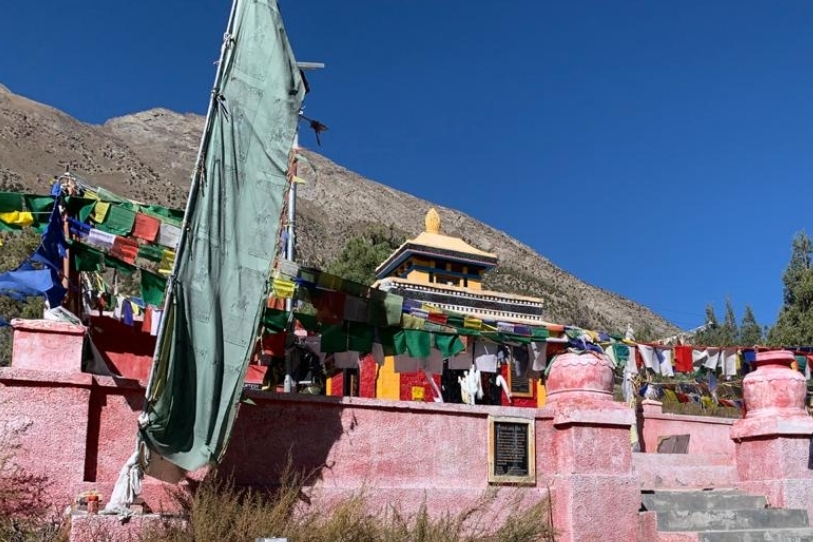
While the pandemic has prevented the celebration of Dosmochey as usual, prayers were conducted at Gompa Soma. If I am not mistaken, within the Gompa Soma building even Chham (monastic dance) took place today. However, I didn’t want to spoil the sanctity of the inner prayer hall of the Chhokhang by taking a video. There were different kinds of visitors today. Youngsters stepping in for one kora, an elderly lady whose devotion was unhindered by her hunchback, beggars from Rajasthan in colourful dupattas and those rushing to provide tea to the monks. Sitting there, you could almost forget who the ‘I’ is anyway, which is kind of what Buddhism encourages. 

Read more

thoughts on Galdan Ngamchot

-Rinchen Angmo

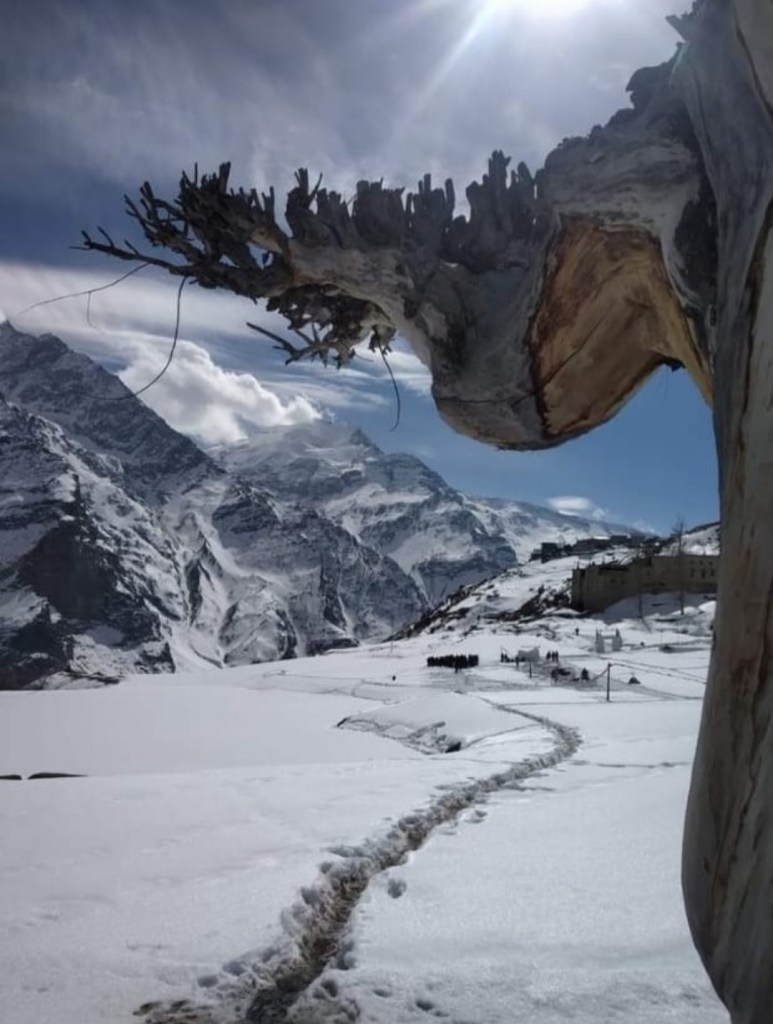
snow, morning. Today is Galdan Ngamchot. My upcoming exams seem more meaningless, futile than ever before. A flash of suffering and then the realization of the emptiness of everything. Emptiness, that’s the key. Buddhism tells one to understand emptiness, and hence gain meaning in life. Today, on the day of Galdan Ngamchot, this realization is somehow more sound. Maybe there is something about auspicious days, when the energy around conspires for the first time to liberate you and not vice versa. So what am I celebrating on Galdan Ngamchot I ask myself. 

Read more

A reflection of the reflections about the Chhorten at Leh Palace

-Rinchen Angmo

Chhorten at Leh Palace


There’s something very interesting about the Chhorten wing (side) of the Leh Palace. The balcony which provides a path for skora (cicumambulation) around the chhorten presents a world in itself. On one side stands the majestic Leh Palace, golden in the light of the setting sun. While Old Leh Town tumbles beneath in all its crooked beauty. And beyond that lies Leh city, an urban landscape. We often venture to remote parts of Ladakh to find beauty, but in our very own Leh are remnants untouched by urbanity. 

Read more

Atal-Rohtang tunnel: Is it a boon or a bane?

By Sonam Chhomo

I am no geologist, not even a researcher on such scientific subjects, I can only present my views as a commentator as I watch the events slowly unfold. 

In front of me rests a television news channel which shows the inauguration of Atal-Rohtang tunnel, the tunnel which can apparently bring prosperity to the Lahaulis. With limited options, my parents watch this news in Punjabi language due to the limited number of news channels operating for Himachal Pradesh on such a big day for us. The mobile phones prove beneficial as my relatives and my mom keep informing each other and delegate the local news and the news that their television sets provide.

Read more

Embracing life

-Nawang Chhoetso


Buddhism teaches us about living and dying in peace. And the main principle used is the theory of impermanence. How can knowing and believing that nothing is permanent help us live and die peacefully?
We as humans fear death, yet we don’t live peacefully. Why do we fear death? This question can be answered by another question .i.e. who are you and what is your identity?

Read more

Tracing Ladakh’s History through its Dynasty.

With reference to ‘The History of Maryul Ladakh’ by Tashi Rabgias (Meme le). 

-Rinchen Angmo

Leh Palace.

The history of Ladakh is a beautiful past of a people similar in some ways and diverse in others, of a land that celebrated all sentient beings, a land of Dharma but also a land that accepted every form of spirituality, a land where good will was and hopefully still is valued above gold. 

Read more

History of Lahaul

– Sonam Chhomo

Lahaul has been the centre of two flourishing Kingdoms- the Ladakh kingdom in the north and north-west and later the Kullu and Chamba kingdoms in the south and south-west, overtime giving the people a space to form their amalgamated version of local cultures. The exact history of these regions, as Nawang states in the earlier essay, is difficult to establish pertaining to the lack of efforts in documentation in these regions. Similarly, Lahaul in the eyes of a tourist is seen as one combined valley but in reality is divided into different cultural zones within the same valley. Customs, traditions, Gods and even languages are separately defined for each valley within the entire Lahaul Valley. 

Read more

History of Spiti

-Nawang Chhoetso

This is a brief history of Spiti, always under a different ruler but its people never suffered. Or may be from what I have seen and observed, the people of Spiti have an amazing ability to endure unpleasant situations.

Nawang Chhoetso
Ancient capital, Palace of King Nono. source unknown

The smaller the unit less known is its history” said historian Luciano Petech .

As a kid I always wondered about the history of my place. Spiti is a barren yet beautiful land that was always isolated from the outer world. Only recently -.i.e. in 1993- did the government allow tourists permits to Spiti Valley. The place then received tourists from around the world and from India. Some travelled and went back appreciating the beauty of the valley, some were astonished by its culture. While few wondered about its history.

Read more

Stories and whatnot tales from the Himalayas: the tradition of Teer-Kaman

There are stories which we choose to share and stories which irrevocably fade away with time. 

— Sonam Chhomo and Nawang Chhoetso

.

When we ask them about their stories, you would notice a sense of hesitation in the beginning, but internally we all know that they are too eager to feel the same emotions again as they traverse through memory lane. And when they speak, you’ll notice that it becomes hard to stop them, you fear interrupting them lest they change their mind and become silent after a pause. You don’t want that to happen, do you? You too want to understand them and wish to find yourself a place in their memory so that you witness them first hand, look at their obscurities and in a childish spree compare yourself to them. Of course our imagination too helps us to walk this same path as they start travelling back to these days in the hope of reliving their most loved memories.

.

Perhaps listening to their stories may retain the authenticity of these experiences which no travel book may hold, perhaps their stories will be the last reminiscent of their generation’s experiences and it is only fair as this becomes our duty to document these as part of history, our history. .

Read more