Written and photographed by Karma Negi.
Losar is the new year celebration in most parts of Kinnaur and Himalayan regions where there is an influence of Himalayan Buddhism. Losar breaks up into two words ‘Lo’ (Year) and ‘Sar’ (New). Every year it is celebrated according to the Tibetan calendar so it doesn’t fall on the 1st of January. The dates vary even amongst the regions that celebrate Losar.
In Kinnaur region, the Losar of Lippa is the most famous one; this year their losar was celebrated from 24th to 26th December. People from nearby places come to enjoy the three-day grand celebrations. Lippa is one of the biggest villages of Kinnaur. While travelling, we have to take a diversion from Akpa or Kiran Nallah on the National Highway 505. The village is a bit remote and reaching there is a task. The whole village is situated on a steep mountain, with a river flowing right below the village.

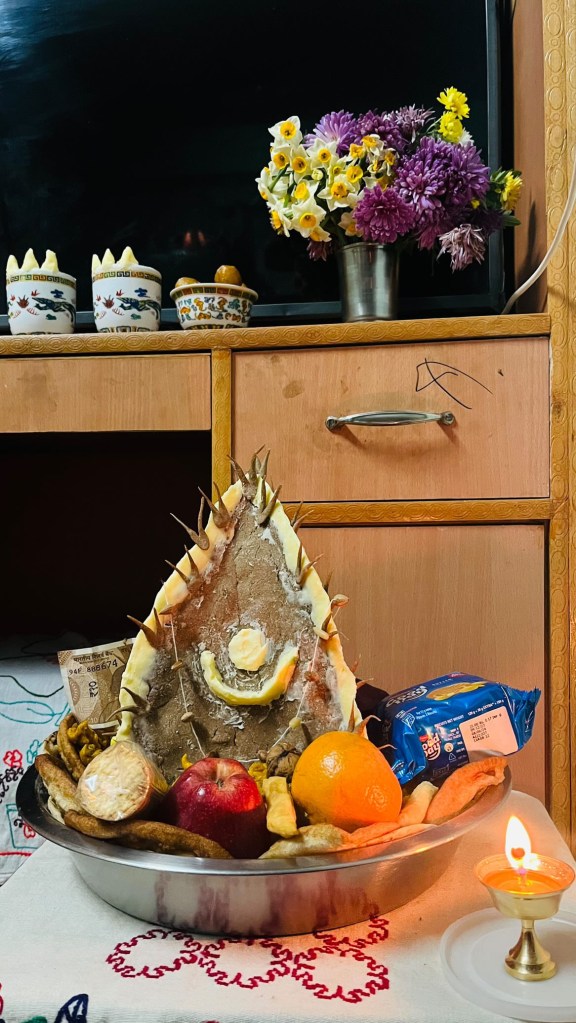
The festival of Losar in Lippa starts with people making “Misto” at their respective homes which will be prayed to for the next three days. Misto is made of tsampa (barley), butter, milk and other Himalayan ingredients. It is then built into an idol like structure, is decorated with other food items and placed on a high table inside the Panthang (living room with a fireplace).
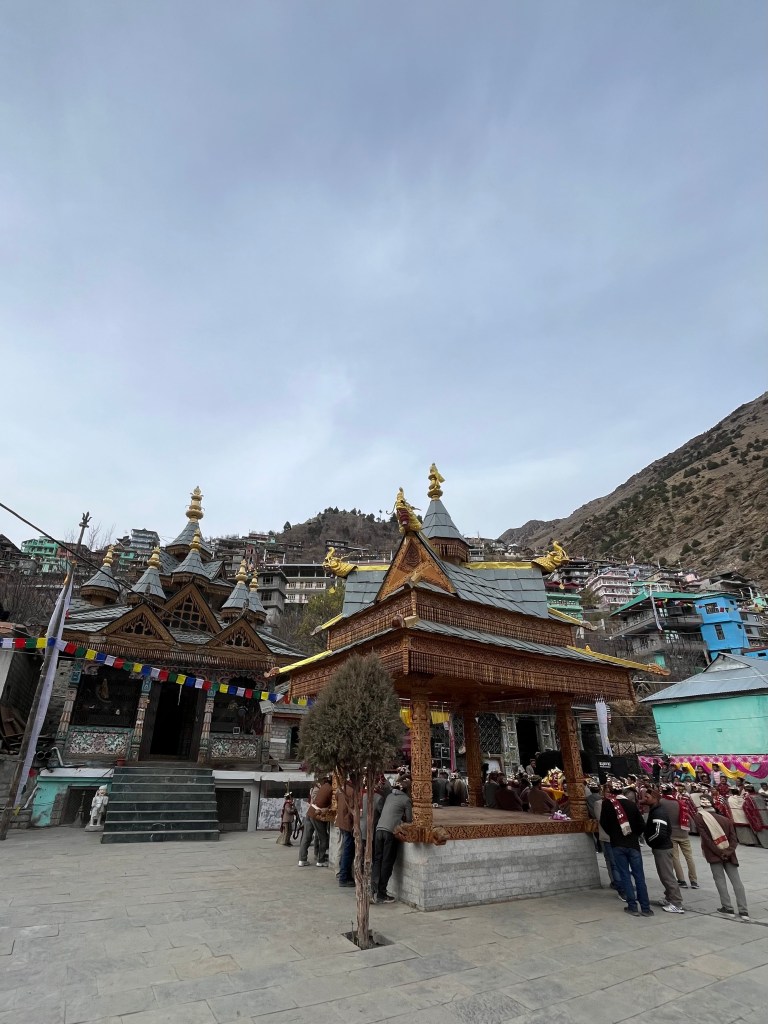
Afterwards the villagers go to the village temple and start with the celebrations. They make the offerings to the local deities and offer new year greetings to each other. The deity comes out of the temple to bless the villagers and also shows gratitude to higher deities and gods for their blessings.
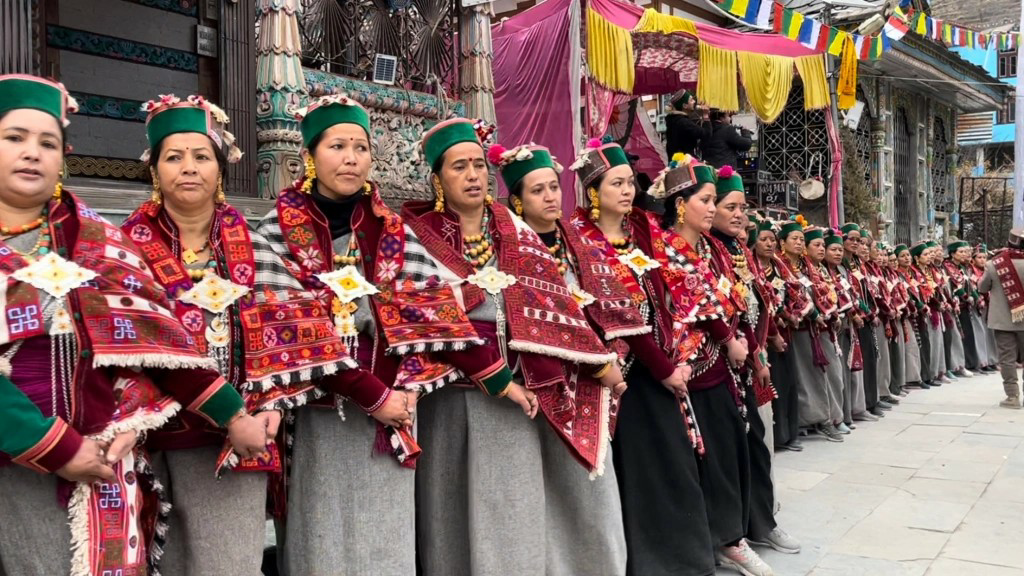
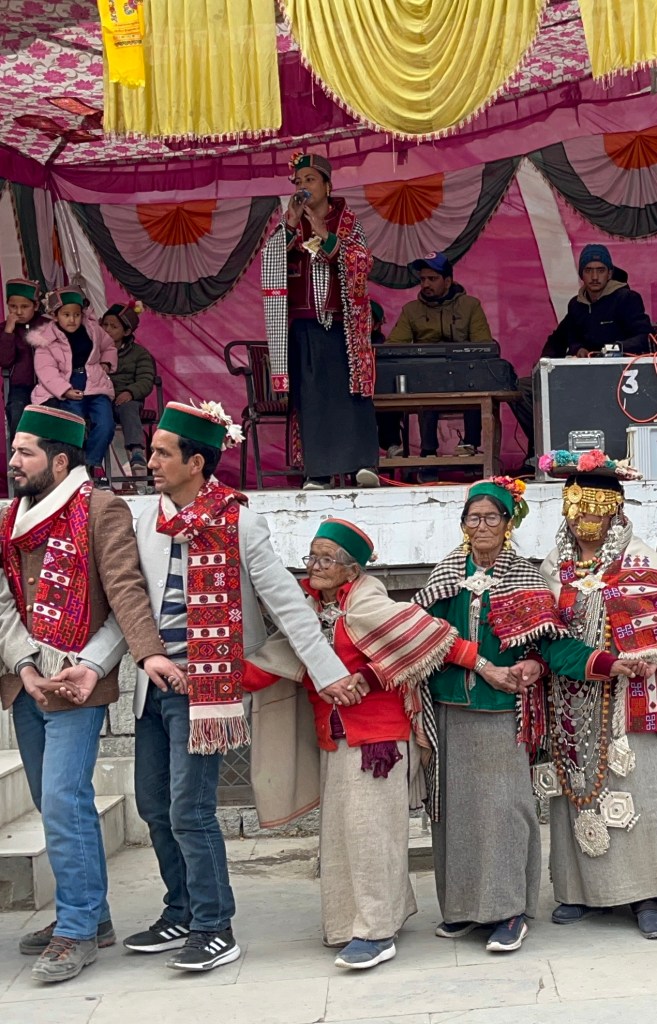
The ladies of the village are required to wear their traditional outfits with ornaments, locally called “Tanang”, to the Santang (place for village gatherings). These women have to enter the Santang completely traditionally dressed and then pray to the deity. Their attires tend to convey their family’s status. The women from wealthier families have gold layers on their silver jewellery. Traditional outfits were primarily a symbol of community living, giving a sense of social belongingness. I don’t know how but people have found ways to stand out using different ornaments as per their social status.

In Kinnaur, we hire locally popular singers to sing live performances. During Lippa’s losar this year, they got 6 singers for 3 days. They had the responsibility of entertaining the villagers. The unique thing was that people (mostly drunk) were offering lots of prize money to the singers.
In the evening, the Santang becomes crowded with people performing Kayang dance, which is locally known as “Mela lagana”. Kayang is one of the most important folk dance forms in Kinnaur and holds its own significance in every kind of celebratory gathering. This dance exhibits extreme discipline and coordination. The people leading in the front have the freedom of movement, but for a beautiful and perfect dance, the people at the back have to mimic a similar flow.Everyone has to maintain a consistent energy: neither too excited nor too dull. Maybe this symbolizes the need to face the up’s and down’s of life with a steady attitude. In this dance, people hold hands and move in a particular pattern in sync with the music. The dance is very smooth, as if people are literally flowing. The person leading the dance takes charge of how the dance progresses. Also the people follow a disciplined order according to one’s age; the elders of the village lead and the younger ones follow. The smooth foot movements of people are very soothing to the eyes.
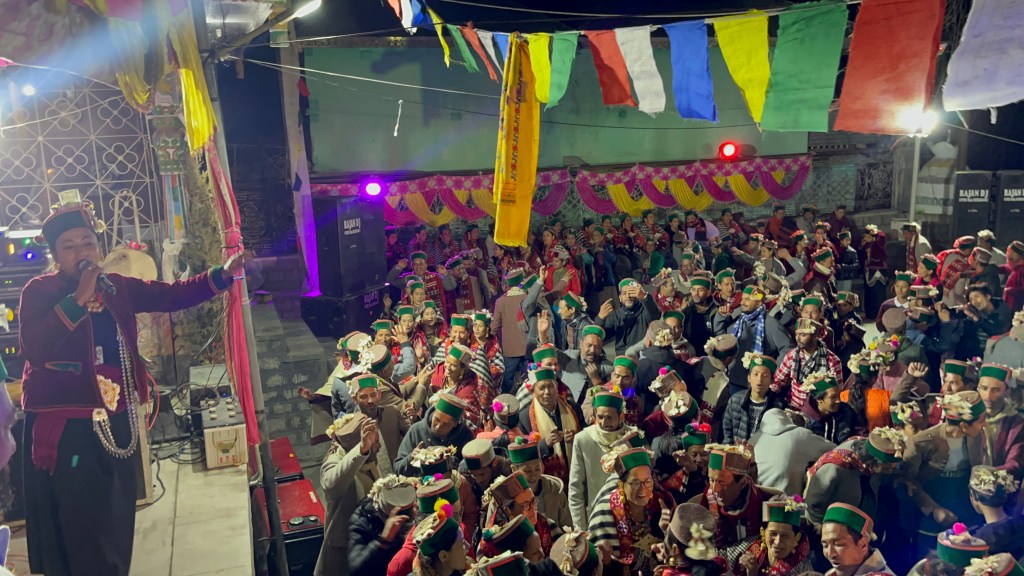
I would like to especially mention Miss Kinzom Dasi, the one with the red cardigan in the picture. She’s 93 years old and the oldest person in Lippa village. Even at this age, she is full of life and embraces her culture beautifully. Her love and respect for her culture was clearly visible during the celebration. At such an old age, she was accompanying the people of Lippa in Kayang dance. She was leading the females, right after the males. I came to know from the locals that she lives alone and does all her daily chores by herself without the support of others. She never got married and hence has no one to call family. Her sister’s children help and take care of her.
People also sing their traditional folk songs; a few ladies start the song and then the rest of the people repeat the songs. They have great knowledge of traditional songs, so it goes on continuously for hours. Best part is that the songs are always so complete, as during marriages they only sing some parts.
After some time, the palanquins holding the deities are brought amongst the locals. People sing different songs to praise the lords and their deity. After some time, the palanquins holding the deity are taken back to their shrine.
The locals keep dancing. The singers then take charge of the entertainment and start their performance; they sing all kinds of Kinnauri songs. During this time of the celebration, you’ll enjoy anyhow. If you are a dance enthusiast, you’ll enjoy to the fullest on popular songs. If you don’t dance, you’ll enjoy observing different people dancing.
Personally for me it was very special. I have always been fascinated by cultural celebrations; how beautifully old people have managed to express emotions and knowledge through songs and culture. Previously, I had always heard these songs in recorded forms, but this time I got to witness them being performed by a group of villagers; wherein, a few people sing songs and then another few reply to those songs.
They basically repeat the lines and keep dancing. I heard the most famous songs like Yangchen Lamo, Zangmo Poti, Thakur Mone and many more.
Lippa was very new to me, I only knew my cousin there. That was a blessing in disguise. When you don’t know anyone, you can do whatever you want and dance the way you wish. I literally danced like nobody was watching. And the people there were very welcoming. I made many friends and had a great time dancing with them.
My Losar experience in Lippa was incredible. The days were all about amazing food, music and dance. The dancing was fun, the music was lively and the people wholeheartedly welcoming. The festival was vibrant with faith, community and culture being revered and celebrated for the auspicious event.
The way in which their culture is carried forward with enthusiasm is commendable. The beauty of culture lies in its inclusion of people from every age group, be it children or old people. Their faith is unshakable and they celebrate Losar so well. They take pride in their culture and value every ritual and tradition. All the people gather on this occasion and celebrate with everyone; the reunion makes their community stronger. May this incredible culture be carried forward by future generations and may people get to be a part of this culture forever.

Written by Karma Negi who belongs to Kinnaur, Himachal. He is passionate about meeting new people and learning about their culture and folklore.

Soo well written… Felt like I’m literally watching a video 📸💞👍
LikeLiked by 1 person
Thank you. Happy to read this comment 😇
LikeLike