By Sonam Chhomo
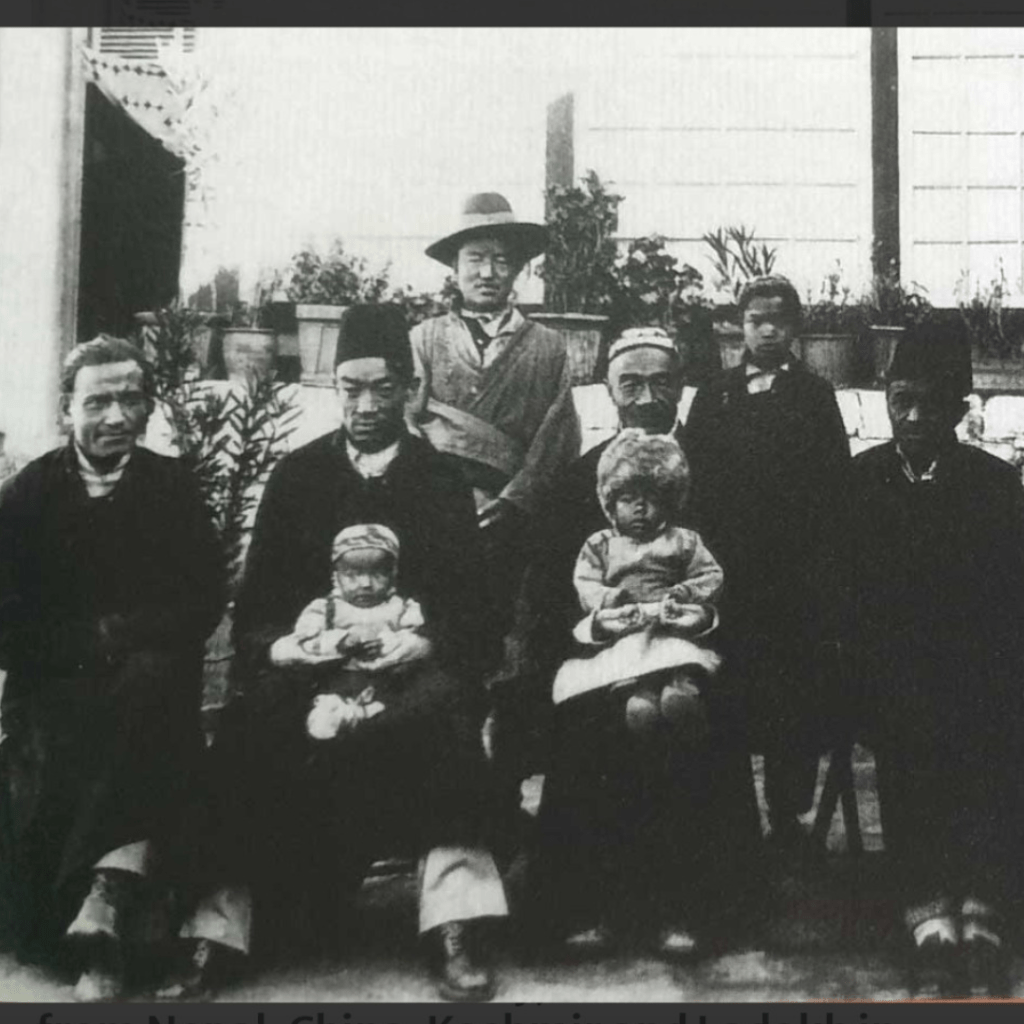
Tibetan Muslims were known as the Kache community in Tibet wherein Kache is a word derived from Kashmir. Kache community come from Kashmiri or Turkic descent through patrilineal lineage. They married Tibetan women when they settled in Tibet which later formed the genesis of intercultural religiosity of the Kache community. According to David Atwill, in the pre-twentieth century context of Tibet, Kache in Tibetan could simply refer to those who practiced Islam without a necessary ethnic affliliation.
As early as the twentieth century, there were in fact two groups of Kache communities- Barkor Kache (South Asian descent) and Wabaling Kache (Chinese descent). Tibetan muslims who are currently living in various locations such as Nepal, Ladakh, Kashmir, and Kalimpong express that they are Tibetans who follow Islam. One of the Tibetan Muslims who interviewed with RFA says that their food habits, dishes, traditional outfits and language are Tibetan, and they offer namaz and uphold their religious traditions. One of the many things that we don’t know about Tibet before 1951 is that the important cities in Tibet such as Lhasa and Shigatse were spaces of harmonious inter-religious communities. According to the article by Claude Arpi, there were/are four mosques in Lhasa, two mosques in Shigatse and one in Tsethang, burial grounds and madrassas which provided social spaces for the Kache community to live as per the Shariat. As per the history of Tibetan muslims compiled by Masood Butt, a Tibetan Muslim who worked in His Holiness The Dalai Lama’s administration, their community origins can be traced to the eighth century AD when Islamic missionaries sent by the Caliphate had settled and married Tibetan women. The fact that a delegate from Tibet had invited the Islamic missionaries shows their openness to interfaith interactions. There is also an instance from the time of His Holiness The Fifth Dalai Lama (seventeenth century) when he built the first mosque in Lhasa, respecting the wishes of the sufi saint from India called Pir Yakub. The current His Holiness The Dalai Lama in response to Claude Arpi on the essence of Tibetan culture said, “Even non-Buddhist Tibetans have adopted the mental attitudes and way of life of Buddhist culture. That culture is based on the practice of compassion and tolerance.” It seems then that mutual compassion and tolerance can truly build a harmonious society. Silk route trade also promoted the diversity in Tibet, particularly owing to the caravans from Ladakh and Central Asia. The tribute (gifts) from the King of Ladakh to His Holiness The Dalai Lama in Lhasa every third year and the annual tribute from Lhasa to Leh was another friendly arrangement that promoted the exchange of commodities and culture.
In 1958, the Kache community/Tibetan Muslims found themselves in a flux as the political and economic turmoil in Tibet worsened after the Chinese invasion. In order to flee Tibet and reach India, they invoked their origins from Kashmir and approached the Indian consulate. It was a postcolonial crisis of citizenship that made the categories on which they could base their indigeneity unclear. Although they invoked their Kashmiri origins to gain Indian citizenship, they were neglected in the coming decades in the social and developmental avenues in Kashmir.
An interesting work of literature that can be directly correlated to the Kache community is Khache Phule’s advices, a seventeenth or eighteenth century text written by a Tibetan Muslim merchant. What makes it interesting is that the treatise is written in colloquial Tibetan (rather than classical Tibetan which was usually the norm) and is a meditation on the folk mind, as Dr. Dawa Norbu states in the Introduction to the translation of this work in English “Never before have we had so much common sense with so little allusion to classical literature. Never before have we had such a good glimpse into the workings of the folk-mind in Tibet.” (36, Arpi)
The article also gives a glimpse into the life of Abdul Wahid Radhu, known as the last caravaneer of Tibet and Central Asia. We’ll dedicate an article on his life journey in the next post. His memoir called Tibetan Caravans explores the last days of a free Tibet from a witness’s point of view, and its review has been done by Thubten Samphel in Hindustan Times.
Sources:
Arpi, Claude. The Life and Time of Abdul Wahid Radhu: A case of fusion of cultures, Transcending conflicts: Indian and Eastern way. Global Foundation for Civilizational Harmony, New Delhi, 2008.
Atwill, David. Boundaries of Belonging: Sino-Indian Relations and the 1960 Tibetan Muslim Incident. The Journal of Asian Studies Vol. 75, No. 3 (August) 2016: 595–620. Doi:10.1017/S0021911816000553.
RFA’s Tibetan service and Roseanne Gerin, Tibetan Muslims straddle faith and tradition in China and India, 17 January 2022. https://www.rfa.org/english/news/tibet/muslims-tradition-01142022181835.html
Further readings:
Samphel, Thubten. The last days of Tibet. Hindustan Times, https://www.hindustantimes.com/books/the-last-days-of-tibet/story-i3WOJPlDNgEgWlWRyvFtZI.html
Dr. Dawa Norbu (Trans.), Kache Phalu’s Advice on the Art of Living, (Library of Tibetan Works and Archives, Dharamsala, 1987).
