– Chemi Lhamo in conversation with Tenzin Sonam
Read moreWomen in Ladakh
As a child, the question of gender inequality was quite foreign to me. Of course, I was aware of differences, but never of inequality per se.
-Rinchen Angmo
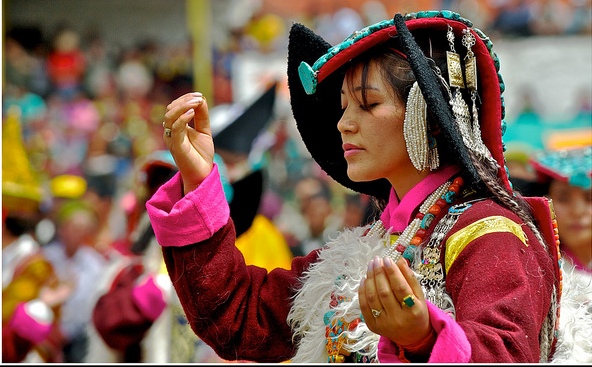
I grew up in spaces that were owned either by my maternal grandmother or by my mother. I guess this statement needs a bit of a context. In Ladakh, the system of marriage is very flexible in terms of which household the bride or the bridegroom goes to; meaning, either the bridegroom could go to the bride’s house(makpa) or vice versa(pagma). ‘Going to’ the other’s house also means assuming more responsibility over that household than your own. Both in my maternal grandmother’s and my mother’s case the bridegroom had come to their house; consequently, they received an equal share of family property. This is a common phenomenon in Ladakh and has been followed from time immemorial. In fact, even the daughters or sons who depart to another household after marriage attain a small share of family property. Hence, in Ladakh, the question of whether or not a woman can own property figures as a redundant one. Why does owning property become so important one may ask.. When one sees one’s mother or grandmother as a figure who owns property, manages it with finesse, and goes unquestioned by society, one also understands that those constructs of a-woman-can’t-handle-‘manly’-responsibilities, are after-all ‘man’-made fallacies.
Read more