Chil-shru: A story of five birds

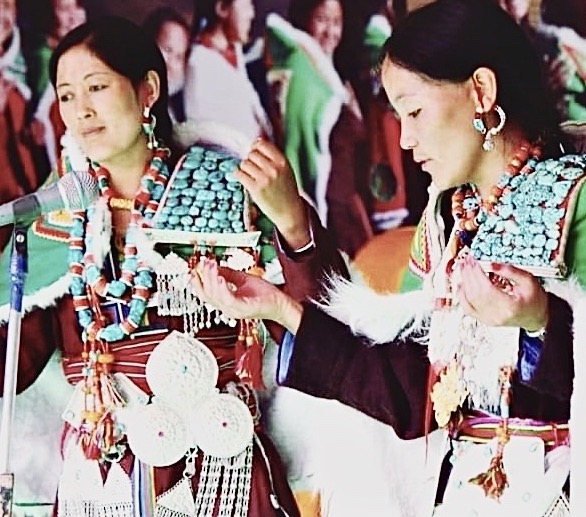
Written by Nawang Chhoetso
A folktale from Spiti.

As I recall, it’s a story of five birds. But a friend of mine insisted that there were more than five birds, however even she wasn’t clear about the details. So this story will be about the tale of 5 birds.

Like all other folktales from Spiti, this too starts with the sentence ” yoyo metuk”- I don’t know what this means but every folktale starts with this sentence followed by “yul jaga chenmo na” -( in a big village). And then the story follows.

Read more
No Childik rang ache pula sum: A folktale from Spiti

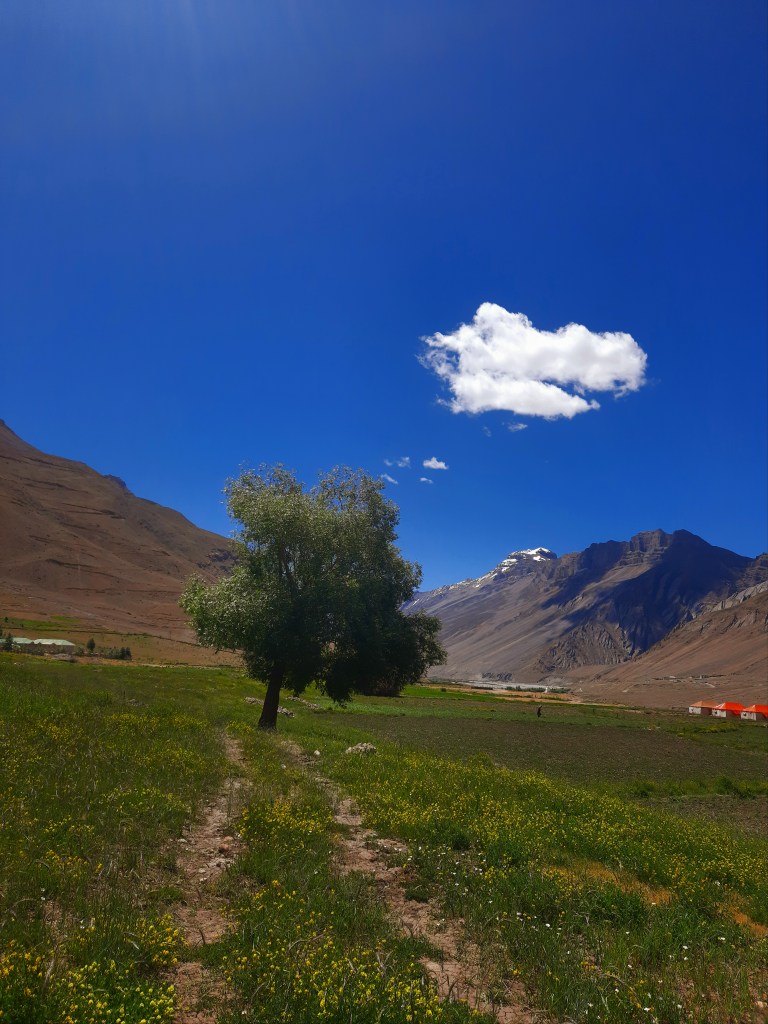
Khara-thanga, Kaza(Spiti) .

Written by Nawang Chhoetso

“No Childik rang ache pula sum”-Brother Childik and his three sisters

It is probably my favourite tale, which was often narrated by my grandparents during my childhood before going to sleep.
It always starts with the sentence, “Ache pula sum la no chichik yotuk” i.e. three sisters had a younger brother named Childik.

Childik is a very unusual name as no one in our region has such a name. I am not sure if this name has any meaning. Maybe errors in oral traditions over several generations resulted in a name like Childik, or maybe it’s a word that we lost over the generations.
Although there is a word “Chikdil” in Bhoti language that means unity.

Read more

The disappearance of Buchen from Hangrang valley, upper Kinnaur

By Karma Negi

I still remember the times when the arrival of Buchen to our village was an annual event. Every year they would appear in the winter months, when all the villagers were done with their farm work and were about to go into resting mode, and then after days of performances, Buchen would disappear for the rest of the year. I remember the Buchen who would go to different villages one after another spreading religious knowledge in dramatic and witty ways.

Read more

Spiti and election

Kibber , Spiti(2020)

Written by-Nawang Chhoetso


Himachal Pradesh will be casting its vote for the general election of the state assembly this month. I have very little and narrow knowledge regarding the working of election on the ground.
Whatever I know regarding it is what I learnt in school and books. We are taught that India is a democratic republic, which meant that people exercising their right to vote will choose their representatives. But it took me years to understand the depth of it. The right to vote is an extraordinary power granted by our constitution. This power was first exercised by eligible voters of India in the election to the first general assembly but it took few more years for people in Spiti to exercise this right. i.e. in the year 1956 in the elections to second general assembly.

Read more

The History of Bodyig (Tibetan script) and its current state in different regions.

Written by Rinchen Angmo.

The Bodyig script was created owing to the vision and foresight of one of the greatest Tibetan Kings, Chogyal Songsten Gampo, the 7th century ruler of Tibet. The King realized that the advancing kingdom of Tibet would soon require its own script. Chogyal Songsten Gampo sent his intelligent minister Thonmi Sambhota to India with fifteen other young Tibetans so that they could learn Indian languages whereby they could develop a script for Tibet. On Thonmi Sambhota’s return from India, the Tibetan script was finalized.

Bodyig also known in some regions as Bodhik or Bhoti, is the script that became indigenous to Tibet, Ladakh, Lahaul (sTod valley), Spiti, Bhutan (Dzongkha), Baltistan, Sikkim (for Bhutias) and other regions. However, the usage of the script is slowly waning in many regions.

Read more

Young and weathering years.

-Rinchen.

Considering Ladakh’s small population, one hears of suicide all too often; specially amidst the youth. Yet, it’s never talked about. These days, there is no solid support structure for the youth. The ‘elders’ who should be guiding the youth are either themselves misguided or are too busy.

In my opinion, one’s solid as well as individually understood source of support, in this day and age, understanding one’s mind. One way to that is through spirituality.

I’m not certain about other places, but surely Ladakh’s Buddhist youth is slowly getting disconnected from its religion: Tibetan-Buddhism. Factors are aplenty: apathy; ‘too cool for spirituality’; ‘too “rational” for spirituality; not been properly introduced to the tenets of the religion; too busy; lack of guidance. The youth today fails to understand that notions of success and coolness cannot take one far; without a firm understanding of the mind we are essentially just drifting through life. On the other side of the coin, the elderly are either unable to effectively share their knowledge, are ‘too cool’ themselves or are ignorant.

Read more

Atal-Rohtang tunnel: Is it a boon or a bane?

By Sonam Chhomo

I am no geologist, not even a researcher on such scientific subjects, I can only present my views as a commentator as I watch the events slowly unfold. 

In front of me rests a television news channel which shows the inauguration of Atal-Rohtang tunnel, the tunnel which can apparently bring prosperity to the Lahaulis. With limited options, my parents watch this news in Punjabi language due to the limited number of news channels operating for Himachal Pradesh on such a big day for us. The mobile phones prove beneficial as my relatives and my mom keep informing each other and delegate the local news and the news that their television sets provide.

Read more

Women of Spiti

One thing that I find common in the women of my region Spiti, is that they have a choice and say in all aspects of life.

-Nawang Chhoetso

Spiti women

The older generation of women -from my grandmother’s age group- are primarily housewives. Their succeeding generation went on to expand their horizons by exploring various career opportunities. Hence, women of my mother’s age group engage in a diverse range of jobs and activities, as teachers, nurses and various other occupations. My generation has ahead us of us a greater number of options. But, what has remained constant for women from all three generations has been the right to make our own decisions. 

Read more