Written by Divya Sharma
Read moreStills from Arunachal
By Shreyansh Pradhan

3 june 2024
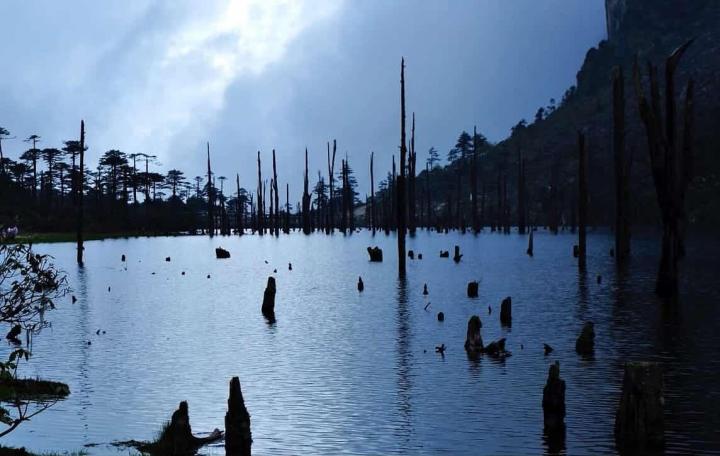
3 june 2024
On Dams and Electricity: A Story from Malana
By Sonam C
In the early summer of 2018, right after I had finished my Class 12 CBSE Board exams, I went with my family to the village of Malana. When I recall this time, I instinctively tell people “We went on a spiritual tour, like a pilgrimage.” Hardly, anyone believes that a group consisting of me, my sister, my mother, uncle and aunt, my cousin, her husband and her two kids travelled and trekked to Malana to pay our respects to the local god Jamlu.
Read morePangong Tso, a living remnant of natural history.
-Written and photographed by Rinchen Angmo
Pangong Tso is so much more than a water body, it is a living remnant of natural history.
Anyone who’s been to Pangong Tso will testify to it’s limitless beauty. Glittering amidst snow capped mountains, the water body is one of its kinds. Different hues of blue adorn it’s large expanse.
Pangong Tso is not only a beautiful water body but also a living remnant of natural history. According to geography, the Tethys sea was an ancient water body that existed in this part of the world. As the two continents collided to give rise to the Himalayas, the sea was subsumed, except some bits of it which remained as lakes. Other theories trace the origin of high altitude lakes to later tectonic activities. Either way, lakes like Pangong Tso in the Trans-Himalayas are living remnants of natural history.

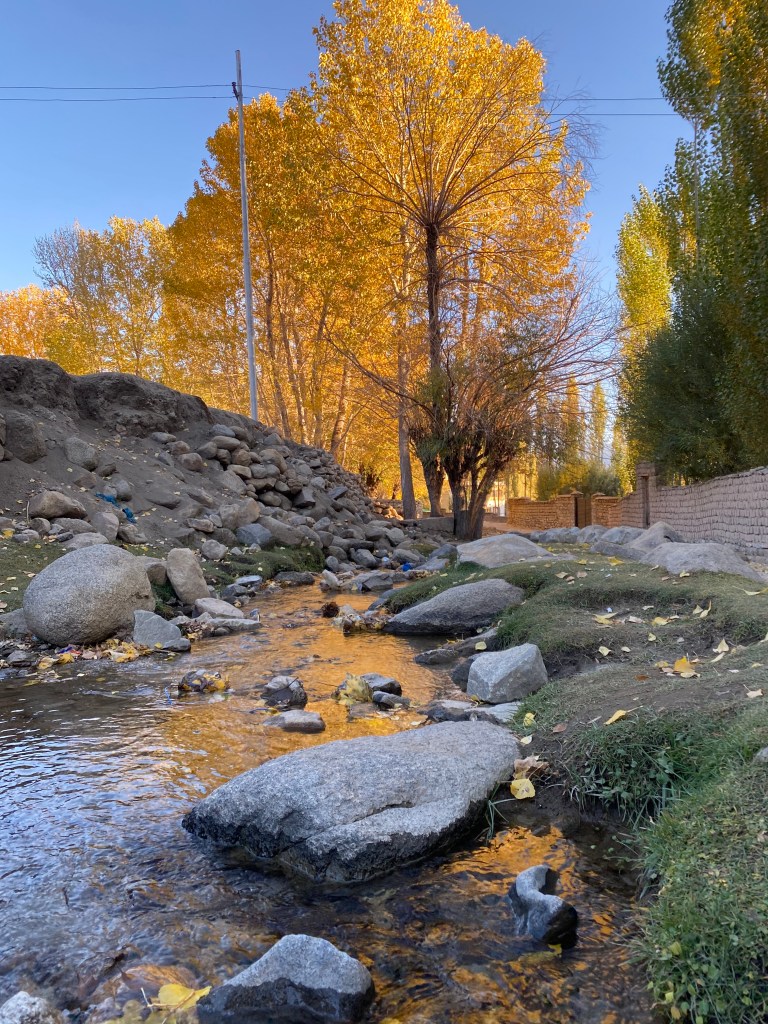
Ought to know something about autumn, ya?
-Written and photographed by Rinchen Angmo
Seasons, they come and go, just like the thoughts in my mind. Even feelings come and go, but they stay a while longer than thoughts do. Yellow leaves, do they make me think of different songs?
Somehow even when I’m not in my homeland, my mind invariably registers different months vis-à-vis the seasons of my homeland. May, there will be apricot blossoms in Ladakh; June, the weather in Ladakh will be pleasant; October, the leaves will turn yellow; December, it will be very cold in Ladakh. That’s why no matter where I am, my mind always understands different months through the lens of the different seasons of Ladakh.
A Photo Essay of Spatial Weaves from Leh Market Area
Written and photographed by Rinchen Angmo
The pictures in this photo essay could possibly depict the myriad microcosms inhabited by different beings within the world of Leh Main Market area. Since I hadn’t taken these with the intention of later turning them into a photo essay, would it perhaps be okay to say that there is a somewhat natural element to the pictures’ composition? A somewhat natural element that wouldn’t have been captured if not for the mobility facilitated by new media.

Anyone who has been to Leh Main Market will know that the little kids who live in the area make the market their playground: playing football, cycling, skateboarding and roller skating. Skateboarding has really taken off in Leh. In a span of a few years, I have noticed an increasing number of skateboarders. This year, I also spotted many roller-skaters; could this be a convenient way to keep ice-skating skills intact? In Ladakh, during the winters, all water bodies get completely frozen: forming natural ice skating arenas. Hence, many take to the winter sport; however, since ice-skates are expensive, not many can afford the sport.
Read moreBus of Life.
-Written by Rinchen.
Hustle- the name that the 21st century gives to life.
Yet, somehow in some corners of Ladakh, people are willing to give and not just get.
Read moreWandering Watze.
A red fox on a full moon’s night.
Written by Rinchen.
My dog’s more aggressive-than-usual- bark got me to peek out of the window. A pointed snout, bushy tail and thin body.. behold the Himalayan Red Fox (known as watze in Ladakh) glimmering under the full moon’s radiance. From its body language, I inferred that it was a frequent visitor. As at any other occasion, I wondered what it meant..symbolically that is.
Read moreStone breaking ceremony and Buchens of Spiti
– Chemi Lhamo in conversation with Tenzin Sonam
Read moreSalchowk and Thultan (as named in sTod, Lahaul valley):
- – Sonam Chhomo
In the areas of Lahaul, Spiti and Ladakh, Tibet, Bhutan, Sikkim, and possibly Arunachal Pradesh, we have these traditional styled tables and mattresses in living rooms that are indigenously connected to our communities.
Read moreAngchok 1
a reverie?
-Rinchen
To my Abile (granny) the 2 day long Chemrey Angchok Chham (religious masked monastic performance event) was more about tending to guests in her bustling house. She recounts how our ancestral house would be full of guests, mostly relatives from outside Chemrey (our village). Chhang (Ladakhi beer) and traditonal barley and meat assortments would flow in plenty and Abile would be busy organizing rooms and food with the aid of helpers.
Read moreShungma
By Sonam Chhomo
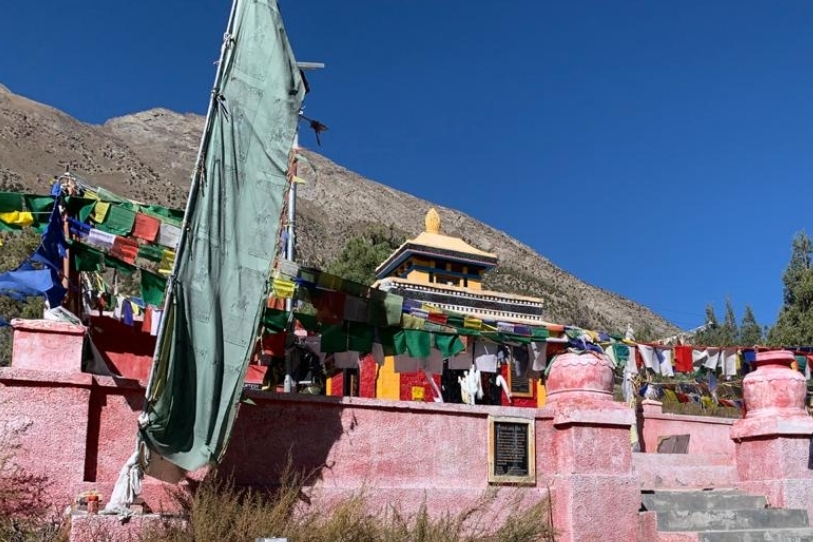
Shungma, Jispa, Lahaul valley
The experience of visiting places you always wanted to see for yourself is ethereal. The journey to this shungma felt almost as if I had been divinely allowed to enter its doorstep after many years of waiting for the perfect opportunity to unfold. As a child, I resisted visiting places at high altitudes because Lahaul was/is not a weather friendly place especially during the winter months. Even this time (it happened after a day), my ears remained blocked and my body felt uncomfortable for about two days.
But this year I felt as if I accomplished something.
Read more