On Dams and Electricity: A Story from Malana

By Sonam C

In the early summer of 2018, right after I had finished my Class 12 CBSE Board exams, I went with my family to the village of Malana. When I recall this time, I instinctively tell people “We went on a spiritual tour, like a pilgrimage.” Hardly, anyone believes that a group consisting of me, my sister, my mother, uncle and aunt, my cousin, her husband and her two kids travelled and trekked to Malana to pay our respects to the local god Jamlu.

Read more
Destined encounters with Jetsunma Tenzin Palmo

By Sonam Chhomo

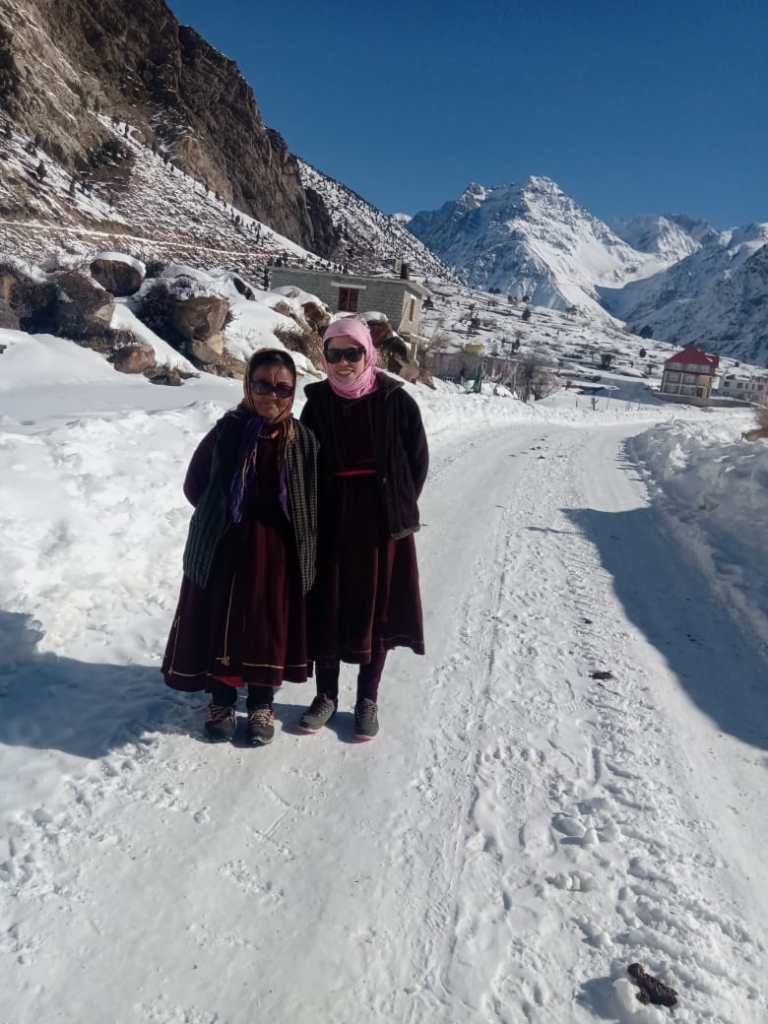
My family friends came to meet us a day after the beginning of the Tibetan New Year and Fagli, the new year celebrated by the people of the Pattan Valley in Lahaul. They were cheery and happy like always. They told me how they used to spend their winter days in Lahaul as children. It started from their school days and ended up discussing the pack of young boys who used to take notice of the shepherds from Zanskar and use their donkeys to ride in the fields. From picking apples from a neighbor’s farm to playing with a bow and arrow in the field, they concluded: “You have never experienced this joy in the cities.” I agreed with her since our city life was almost devoid of the community and nature that Lahual offered. In the next few silent minutes, my aunt finally asked me about my meeting with Jetsunma. She later revealed how she met Jetsunma Palmo. Her first meeting was surprisingly in that same cave that Jetsunma had resided in. She had gone on one of her expeditions with her father to the jungle. One day, as she was the youngest in that expedition, she was sent to her to ask for some salt. The first meeting was the simple act of getting salt from Jetsunma. The second time she met her was at a function organized by some monks from Kinnaur. At a random book collection for her daughter at Capital Book Depot in Chandigarh, she came across a book with a cover image of someone she knew. On further notice, she recognized Jetsunma Tenzin Palmo in her first book. Her meetings with her happened by chance as if fate was just unveiling itself as she opened one door to another.

Read more

Nas, the root of my food associated existence.

Written by Rinchen Angmo

Nas, the food associated root of my existence. The Ladakhi word for barley is nas. For centuries, the people of Ladakh, Tibet, Spiti, Lahaul and various places across the Trans-Himalayas have cultivated barley. In most parts of the aforementioned places, a barley based dish called kholak/tsampa has from time immemorial been a staple diet.

Though I don’t eat kholak as often as I would like to, the dish inevitably becomes a symbol of the root of my food associated existence. I say food associated specifically, because there are various other ways of quantifying roots of existence in different tangible and philosophical spheres. 

Barley field in Chemrey, Ladakh.
Read more

Guru Rinpoche’s Lake.

-Written by Rinchen Angmo

It’s been more than a year. Last year around March, I made a pilgrimage to Tso Pema, tso meaning lake and pema meaning lotus; I will refer to the holy lake as Tso. Tso Pema is located in Rewalsar, Himachal Pradesh, India. For followers of Vajrayana Buddhism, Tso is a very holy site associated with Guru Rinpoche.

How do I describe the serenity of Tso? There is a sense of blessedness at Tso that escapes description. The jade green lake, the deep green trees and the pilgrims circumambulating around the holy lake, fill the air with a sense of serene jubilation.

Read more

The History of Bodyig (Tibetan script) and its current state in different regions.

Written by Rinchen Angmo.

The Bodyig script was created owing to the vision and foresight of one of the greatest Tibetan Kings, Chogyal Songsten Gampo, the 7th century ruler of Tibet. The King realized that the advancing kingdom of Tibet would soon require its own script. Chogyal Songsten Gampo sent his intelligent minister Thonmi Sambhota to India with fifteen other young Tibetans so that they could learn Indian languages whereby they could develop a script for Tibet. On Thonmi Sambhota’s return from India, the Tibetan script was finalized.

Bodyig also known in some regions as Bodhik or Bhoti, is the script that became indigenous to Tibet, Ladakh, Lahaul (sTod valley), Spiti, Bhutan (Dzongkha), Baltistan, Sikkim (for Bhutias) and other regions. However, the usage of the script is slowly waning in many regions.

Read more

A beautifully surreal month.

Written by Rinchen.

I would like to begin by thanking His Holiness The Dalai Lama for blessing and bringing so much joy to all the people of Ladakh. Chhaksal.

Each day of His Holiness’s presence in Ladakh has been filled with beauty and wonder for each and every Ladakhi in so many different ways. His Holiness’s interfaith visits, secular teachings, religious teachings, visits to Zanskar and Lingshed, and the various functions that were hosted in his honour, brought blessings upon and joy to a countless number of beings who had the sode and sonam (luck and merit) to be in His Holiness’s presence. We Ladakhis are truly honoured to have had His Holiness visit Ladakh as his first destination since the pandemic broke out.

We will miss all the beautiful moments that His Holiness’s visit brought and now look forward to His Holiness’s visit next year.

Read more

Shungma

By Sonam Chhomo

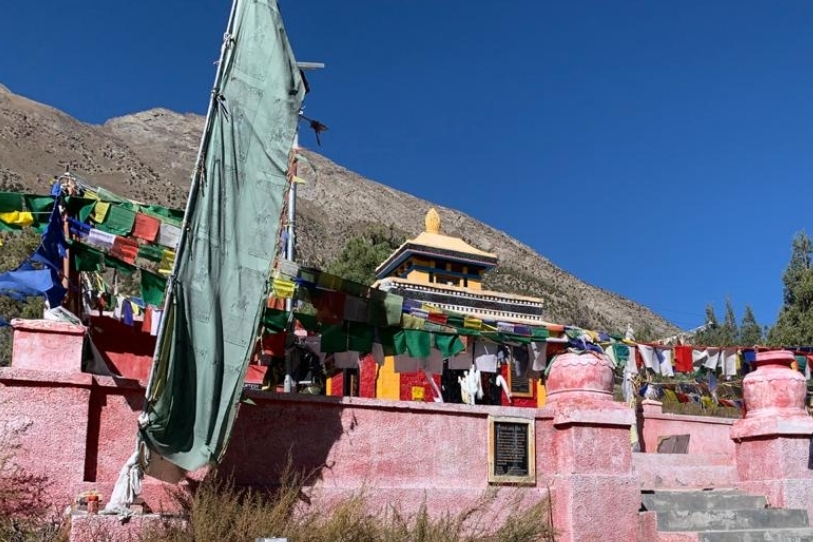
Shungma, Jispa, Lahaul valley

The experience of visiting places you always wanted to see for yourself is ethereal. The journey to this shungma felt almost as if I had been divinely allowed to enter its doorstep after many years of waiting for the perfect opportunity to unfold. As a child, I resisted visiting places at high altitudes because Lahaul was/is not a weather friendly place especially during the winter months. Even this time (it happened after a day), my ears remained blocked and my body felt uncomfortable for about two days.

But this year I felt as if I accomplished something.

Read more

History of Lahaul

– Sonam Chhomo

Lahaul has been the centre of two flourishing Kingdoms- the Ladakh kingdom in the north and north-west and later the Kullu and Chamba kingdoms in the south and south-west, overtime giving the people a space to form their amalgamated version of local cultures. The exact history of these regions, as Nawang states in the earlier essay, is difficult to establish pertaining to the lack of efforts in documentation in these regions. Similarly, Lahaul in the eyes of a tourist is seen as one combined valley but in reality is divided into different cultural zones within the same valley. Customs, traditions, Gods and even languages are separately defined for each valley within the entire Lahaul Valley. 

Read more