Chil-shru: A story of five birds

Written by Nawang Chhoetso
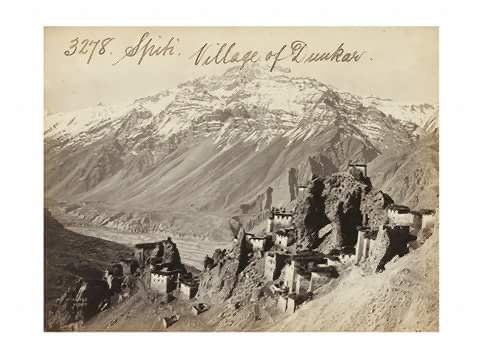
A folktale from Spiti.

As I recall, it’s a story of five birds. But a friend of mine insisted that there were more than five birds, however even she wasn’t clear about the details. So this story will be about the tale of 5 birds.

Like all other folktales from Spiti, this too starts with the sentence ” yoyo metuk”- I don’t know what this means but every folktale starts with this sentence followed by “yul jaga chenmo na” -( in a big village). And then the story follows.

Read more
Guru Rinpoche’s Lake.

-Written by Rinchen Angmo

It’s been more than a year. Last year around March, I made a pilgrimage to Tso Pema, tso meaning lake and pema meaning lotus; I will refer to the holy lake as Tso. Tso Pema is located in Rewalsar, Himachal Pradesh, India. For followers of Vajrayana Buddhism, Tso is a very holy site associated with Guru Rinpoche.

How do I describe the serenity of Tso? There is a sense of blessedness at Tso that escapes description. The jade green lake, the deep green trees and the pilgrims circumambulating around the holy lake, fill the air with a sense of serene jubilation.

Read more

Kache community of Tibet

By Sonam Chhomo

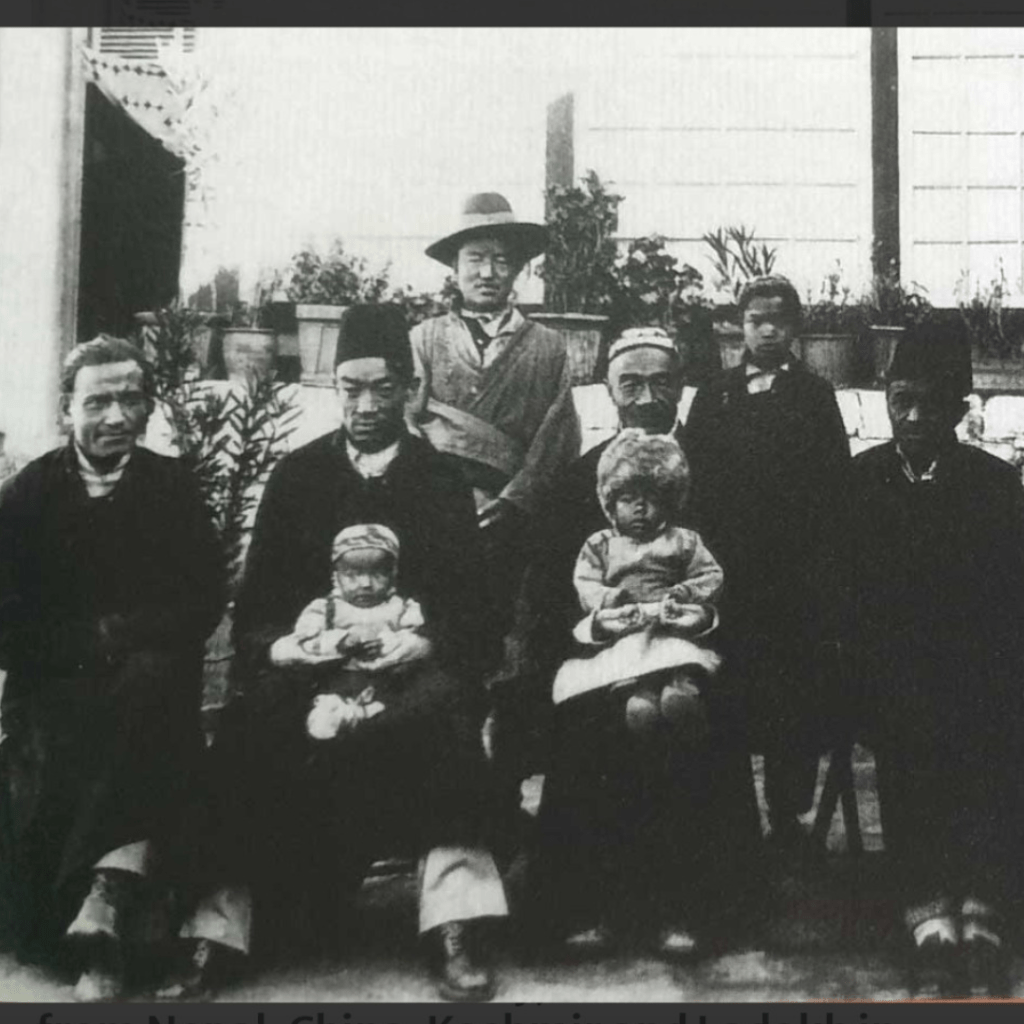
Image source: Siddiq Wahid, Tibetan Muslims in Tibet, 2022, accessed via https://www.rfa.org/english/news/tibet/muslims-tradition-01142022181835.html

Tibetan Muslims were known as the Kache community in Tibet wherein Kache is a word derived from Kashmir. Kache community come from Kashmiri or Turkic descent through patrilineal lineage. They married Tibetan women when they settled in Tibet which later formed the genesis of intercultural religiosity of the Kache community. According to David Atwill, in the pre-twentieth century context of Tibet, Kache in Tibetan could simply refer to those who practiced Islam without a necessary ethnic affliliation.

Read more

A layman’s reflections on ‘A Guide to the Bodhisattva’s Way of Life’ by Shantideva. 

by Rinchen Angmo

Having had the good fortune to receive His Holiness The Dalai Lama’s teachings on ‘A Guide to the Bodhisattva’s Way of Life’ by Shantideva at Jiwestal (in Ladakh) amidst thousands of other devotees, I set out to read the book myself. I was stunned by the poetic beauty and simplicity of the teachings in the book by Shantideva.

One is not supposed to teach Dharma unless one has reached a certain level; so this article is in no way an instruction, but a mere layman’s appreciation of the book written by a great Buddhist master. 

Read more

The History of Bodyig (Tibetan script) and its current state in different regions.

Written by Rinchen Angmo.

The Bodyig script was created owing to the vision and foresight of one of the greatest Tibetan Kings, Chogyal Songsten Gampo, the 7th century ruler of Tibet. The King realized that the advancing kingdom of Tibet would soon require its own script. Chogyal Songsten Gampo sent his intelligent minister Thonmi Sambhota to India with fifteen other young Tibetans so that they could learn Indian languages whereby they could develop a script for Tibet. On Thonmi Sambhota’s return from India, the Tibetan script was finalized.

Bodyig also known in some regions as Bodhik or Bhoti, is the script that became indigenous to Tibet, Ladakh, Lahaul (sTod valley), Spiti, Bhutan (Dzongkha), Baltistan, Sikkim (for Bhutias) and other regions. However, the usage of the script is slowly waning in many regions.

Read more

Shey Shrubh Lha.

-Written by Rinchen.

My Abile(granny) said that today is Shey Shrubhlha: the day on which Shey’s protector deity Dorje Chenmo enters a human being in order to give advice to the village of Shey. The day of Shrubh lha also marks the beginning of harvest.  I’m not exactly sure how this spans out these days and all that I know about how it spanned out back in my granny’s youth is stemming from bits of memories that my granny still holds. For those who don’t know, Shey, now a village, was once the summer capital of the Kingdom of Ladakh.

My granny said two of the things she remembers from this occasion is that on this day Dorje Chenmo using a human being as a medium visits the Shey Lonpo House ( one of the foremost erstwhile ministerial families in Ladakh during the King’s reign) and a traditional dance is held on the lawn before the Lha-khang (abode of the lha (deity), in this case Dorje Chenmo). Ofcourse, other important events also take place on this occasion, but these are the two which my grandmother recalls from personal experience.

Read more

A beautifully surreal month.

Written by Rinchen.

I would like to begin by thanking His Holiness The Dalai Lama for blessing and bringing so much joy to all the people of Ladakh. Chhaksal.

Each day of His Holiness’s presence in Ladakh has been filled with beauty and wonder for each and every Ladakhi in so many different ways. His Holiness’s interfaith visits, secular teachings, religious teachings, visits to Zanskar and Lingshed, and the various functions that were hosted in his honour, brought blessings upon and joy to a countless number of beings who had the sode and sonam (luck and merit) to be in His Holiness’s presence. We Ladakhis are truly honoured to have had His Holiness visit Ladakh as his first destination since the pandemic broke out.

We will miss all the beautiful moments that His Holiness’s visit brought and now look forward to His Holiness’s visit next year.

Read more

#BOG – bring on the bog.

-written by Rinchen.

Glistening  heads and backs walking through lush green fields set against brown and blue mountains.

Perhaps the aforementioned line is rather romanticized, yet it cannot be denied that Alchi women donning their entire traditional attire adds a sort of enigma to Alchi’s blessed land.

Alchi is a hamlet in the Sham region of Ladakh. Blessed by the Alchi Choskor, ( which is the oldest surviving monastery in Ladakh) the hamlet is mesmerising to say the least. 

Read more

written by Rinchen.

Followers of Tibetan Buddhism believe that both merit and demerit can be multiplied multifold times during an eclipse. Hence, prayers and good deeds are encouraged. Today’s lunar eclipse was one such occasion. The eclipse period ended at about 12 p.m.

As a beginner(even that would be an overstatement) in trying to follow the Tibetan-Buddhist way, there’s not much I can understand. However, what I’ve gauged is that the normal human mind clouded by illusions cannot always grasp concepts directly but must in fact keep an open mind.

Read more

Tracing Ladakh’s History through its Dynasty.

With reference to ‘The History of Maryul Ladakh’ by Tashi Rabgias (Meme le). 

-Rinchen Angmo

Leh Palace.

The history of Ladakh is a beautiful past of a people similar in some ways and diverse in others, of a land that celebrated all sentient beings, a land of Dharma but also a land that accepted every form of spirituality, a land where good will was and hopefully still is valued above gold. 

Read more

History of Lahaul

– Sonam Chhomo

Lahaul has been the centre of two flourishing Kingdoms- the Ladakh kingdom in the north and north-west and later the Kullu and Chamba kingdoms in the south and south-west, overtime giving the people a space to form their amalgamated version of local cultures. The exact history of these regions, as Nawang states in the earlier essay, is difficult to establish pertaining to the lack of efforts in documentation in these regions. Similarly, Lahaul in the eyes of a tourist is seen as one combined valley but in reality is divided into different cultural zones within the same valley. Customs, traditions, Gods and even languages are separately defined for each valley within the entire Lahaul Valley. 

Read more

History of Spiti

-Nawang Chhoetso

This is a brief history of Spiti, always under a different ruler but its people never suffered. Or may be from what I have seen and observed, the people of Spiti have an amazing ability to endure unpleasant situations.

Nawang Chhoetso
Ancient capital, Palace of King Nono. source unknown

The smaller the unit less known is its history” said historian Luciano Petech .

As a kid I always wondered about the history of my place. Spiti is a barren yet beautiful land that was always isolated from the outer world. Only recently -.i.e. in 1993- did the government allow tourists permits to Spiti Valley. The place then received tourists from around the world and from India. Some travelled and went back appreciating the beauty of the valley, some were astonished by its culture. While few wondered about its history.

Read more

Women of Spiti

One thing that I find common in the women of my region Spiti, is that they have a choice and say in all aspects of life.

-Nawang Chhoetso

Spiti women

The older generation of women -from my grandmother’s age group- are primarily housewives. Their succeeding generation went on to expand their horizons by exploring various career opportunities. Hence, women of my mother’s age group engage in a diverse range of jobs and activities, as teachers, nurses and various other occupations. My generation has ahead us of us a greater number of options. But, what has remained constant for women from all three generations has been the right to make our own decisions. 

Read more