History of Lahaul

– Sonam Chhomo

Lahaul has been the centre of two flourishing Kingdoms- the Ladakh kingdom in the north and north-west and later the Kullu and Chamba kingdoms in the south and south-west, overtime giving the people a space to form their amalgamated version of local cultures. The exact history of these regions, as Nawang states in the earlier essay, is difficult to establish pertaining to the lack of efforts in documentation in these regions. Similarly, Lahaul in the eyes of a tourist is seen as one combined valley but in reality is divided into different cultural zones within the same valley. Customs, traditions, Gods and even languages are separately defined for each valley within the entire Lahaul Valley. 

Read more
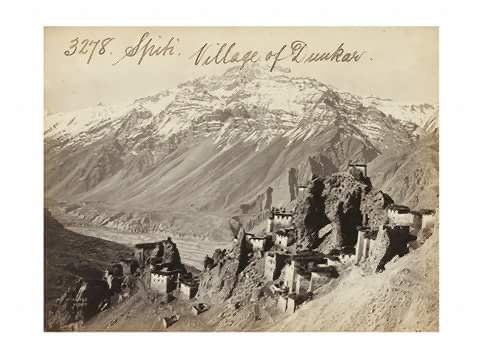
History of Spiti

-Nawang Chhoetso

This is a brief history of Spiti, always under a different ruler but its people never suffered. Or may be from what I have seen and observed, the people of Spiti have an amazing ability to endure unpleasant situations.

Nawang Chhoetso
Ancient capital, Palace of King Nono. source unknown

The smaller the unit less known is its history” said historian Luciano Petech .

As a kid I always wondered about the history of my place. Spiti is a barren yet beautiful land that was always isolated from the outer world. Only recently -.i.e. in 1993- did the government allow tourists permits to Spiti Valley. The place then received tourists from around the world and from India. Some travelled and went back appreciating the beauty of the valley, some were astonished by its culture. While few wondered about its history.

Read more

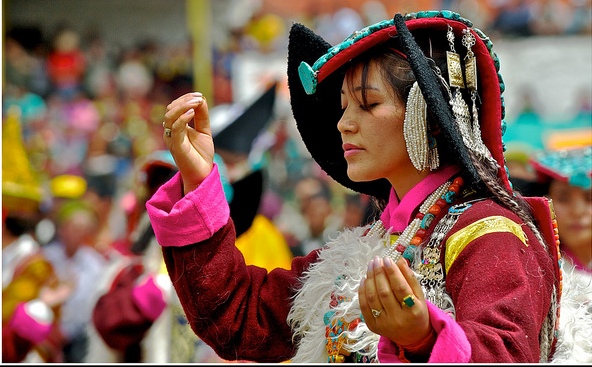
Women in Ladakh

As a child, the question of gender inequality was quite foreign to me. Of course, I was aware of differences, but never of inequality per se.

-Rinchen Angmo

Image courtesy: watsupptoday.com

I grew up in spaces that were owned either by my maternal grandmother or by my mother. I guess this statement needs a bit of a context. In Ladakh, the system of marriage is very flexible in terms of which household the bride or the bridegroom goes to; meaning, either the bridegroom could go to the bride’s house(makpa) or vice versa(pagma). ‘Going to’ the other’s house also means assuming more responsibility over that household than your own. Both in my maternal grandmother’s and my mother’s case the bridegroom had come to their house; consequently, they received an equal share of family property. This is a common phenomenon in Ladakh and has been followed from time immemorial. In fact, even the daughters or sons who depart to another household after marriage attain a small share of family property. Hence, in Ladakh, the question of whether or not a woman can own property figures as a redundant one. Why does owning property become so important one may ask.. When one sees one’s mother or grandmother as a figure who owns property, manages it with finesse, and goes unquestioned by society, one also understands that those constructs of a-woman-can’t-handle-‘manly’-responsibilities, are after-all ‘man’-made fallacies. 

Read more