Climate change in the trans-Himalayas.

Written by Rinchen Angmo on 5th June 2023.

World environment day. I don’t know about the world, but climate change sure feels all too real in Ladakh. Those from other trans-Himalayan regions too seem to be finding this summer cooler than usual. We held a public poll on our Rewa Sum story asking whether ‘Trans-Himalayan summer feels cooler than usual?’ this year and the above picture demonstrates what the 18 respondents had to say. Besides everyone in Ladakh seems to be talking about how unusually cool this summer is. A fact highlighted by the inconsistent opening and closing of mountain passes in the region. 

Read more

Long live His Holiness the Dalai Lama.

written by Rinchen Angmo

It is very disturbing to witness how manipulative media houses and ignorant people have the audacity to try defame His Holiness the Dalia Lama who has dedicated every moment of his life for the well being of sentient beings. It is to challenge this audacity that I feel compelled to write this. For too long we have let hegemonic forces spew venom, it’s high time we put an end to contrived narratives that deliberately spread hate. 

Before I proceed I want to put forth some questions: Do you know what enlightenment means? Do you understand Buddhism? Do you understand the practices of Tibetan Buddhism? Do you understand what it means to perceive reality beyond duality? Do you understand what blessings mean? Do you understand the real meaning of compassion? Do you understand Tibetan culture? Do you understand that when one prostrates before statues it symbolizes the offering of body, speech and mind? Do understand the symbolic meaning of offering body, speech and mind? Do you understand the meaning of emptiness? Do you understand what it means to dedicate not just one, but several lifetimes for the well-being of other sentient beings?

Read more

New age Kinnauri weddings

-written by Karma Negi

Marriage is one of the most important institutions of any civilisation. It acts as the base of many societies. Various societies have their own rituals and customs for marriage.

And over time, the rituals and customs have evolved. In the old days, Kinnauri weddings used to happen for 4 days. But due to time constraints and other unknown reasons, marriages have now become just a 2 day event.

Read more

Ladakh, 6th Schedule and The Third Pole: What happens when glaciers melt away?

Written by Rinchen Angmo

The third pole derives its name from the fact that it contains the largest reserve of freshwater after the North and South Pole. The glaciers of the third pole feed some of the major rivers of Asia including Indus, Ganga, Brahmaputra, Mekong, Yangtze and the Yellow Rivers (Banskota 64). Can we really not talk about the fate of regions that form the third pole when it is the source of the ‘10 major river systems that provide irrigation, power and drinking water to over 1.9 billion people in Asia – over 24 % of the world’s population’? (thetthirdpole.net). When we see these figures, we must bear in mind that behind each number is an individual life, be it of a human or an animal. The magnitude of suffering that the imminent climate crisis can cause is beyond our imagination.

Read more

Remembering Adhe Tapontsang la: ‘ The Voice that Remembers’.

-Rinchen Angmo

‘The Voice that Remembers’ is a book by the late Adhe Tapontsang la as told to Joy Blakeslee. Adhe la’s account of how the Communist Party of China forcefully occupied Tibet, is eye opening to say the least. Like many Tibetans, Adhe la stood against Chinese occupation and participated in the freedom struggles waged in Kham (in eastern Tibet). Consequently, she was imprisoned for 27 years. Throughout those 27 years she was subjected to physical, sexual and mental abuse by prison officials under the Communist Party of China. Through her book, she recounts not only her own struggles, but also that of millions of Tibetans who perished under the Communist Party of China. Unfortunately, this brutal occupation continues till date and even as we speak many Tibetan political prisoners continue to face inexplicable tortures in the Communist Party of China’s prisons.

Read more

The disappearance of Buchen from Hangrang valley, upper Kinnaur

By Karma Negi

I still remember the times when the arrival of Buchen to our village was an annual event. Every year they would appear in the winter months, when all the villagers were done with their farm work and were about to go into resting mode, and then after days of performances, Buchen would disappear for the rest of the year. I remember the Buchen who would go to different villages one after another spreading religious knowledge in dramatic and witty ways.

Read more

No displacement. Period.

Written by Rinchen Angmo

On 28th November 2022, The Administration of the Union Territory of Ladakh Revenue Department released a document : ‘Inviting objections from the general public to the draft “The Union territory of Ladakh Right to Fair Compensation and Transparency in Land Acquisition, Rehabilitation and Resettlement (Social Impact Assesment and Consent) Rules, 2022.

I have many objections. The first being, despite being guaranteed the Sixth Schedule by the Constitution of this country as a region comprised of 97% members belonging to the Scheduled Tribe, we have so far heard nothing about our land safeguards. Instead here we are having to look at schemes that are opening doors for land acquisition instead. Slow claps.

Read more

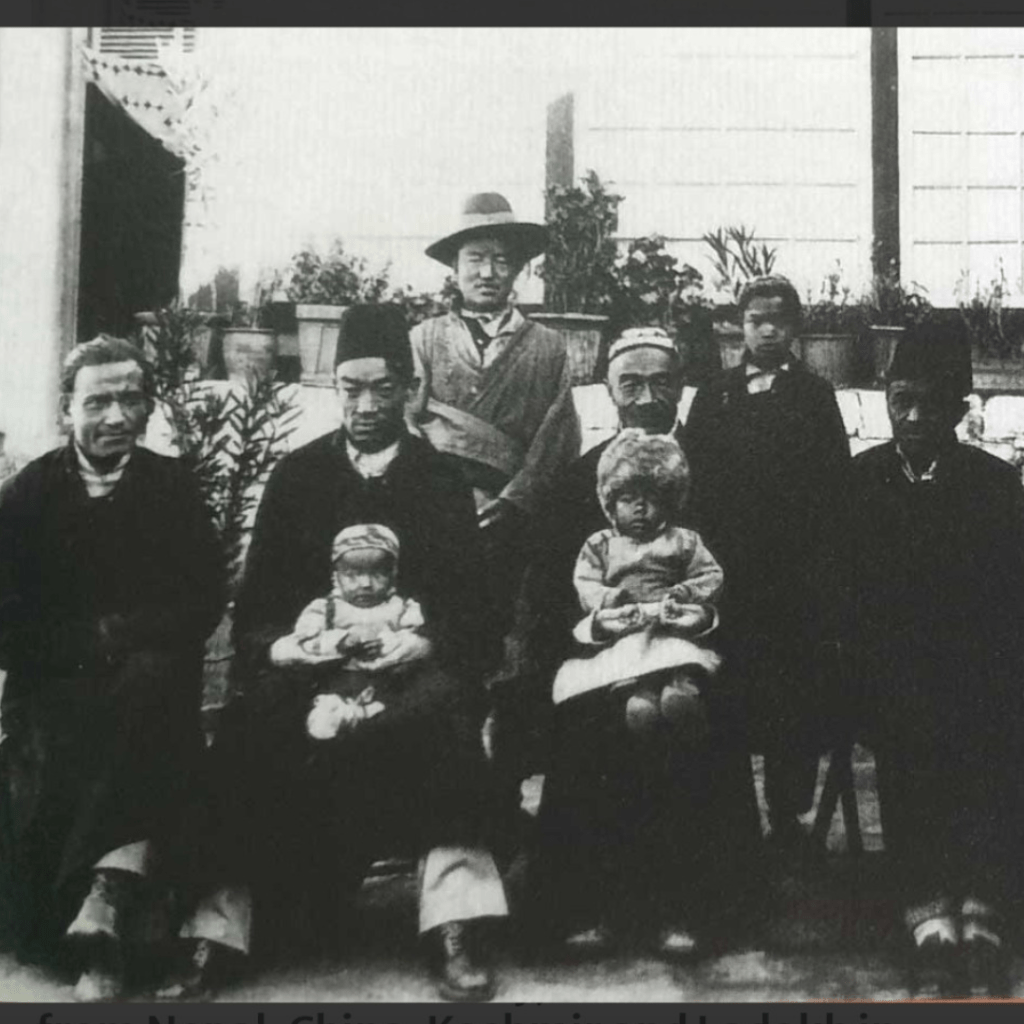
Kache community of Tibet

By Sonam Chhomo

Image source: Siddiq Wahid, Tibetan Muslims in Tibet, 2022, accessed via https://www.rfa.org/english/news/tibet/muslims-tradition-01142022181835.html

Tibetan Muslims were known as the Kache community in Tibet wherein Kache is a word derived from Kashmir. Kache community come from Kashmiri or Turkic descent through patrilineal lineage. They married Tibetan women when they settled in Tibet which later formed the genesis of intercultural religiosity of the Kache community. According to David Atwill, in the pre-twentieth century context of Tibet, Kache in Tibetan could simply refer to those who practiced Islam without a necessary ethnic affliliation.

Read more

Spiti and election

Kibber , Spiti(2020)

Written by-Nawang Chhoetso


Himachal Pradesh will be casting its vote for the general election of the state assembly this month. I have very little and narrow knowledge regarding the working of election on the ground.
Whatever I know regarding it is what I learnt in school and books. We are taught that India is a democratic republic, which meant that people exercising their right to vote will choose their representatives. But it took me years to understand the depth of it. The right to vote is an extraordinary power granted by our constitution. This power was first exercised by eligible voters of India in the election to the first general assembly but it took few more years for people in Spiti to exercise this right. i.e. in the year 1956 in the elections to second general assembly.

Read more

A layman’s reflections on ‘A Guide to the Bodhisattva’s Way of Life’ by Shantideva. 

by Rinchen Angmo

Having had the good fortune to receive His Holiness The Dalai Lama’s teachings on ‘A Guide to the Bodhisattva’s Way of Life’ by Shantideva at Jiwestal (in Ladakh) amidst thousands of other devotees, I set out to read the book myself. I was stunned by the poetic beauty and simplicity of the teachings in the book by Shantideva.

One is not supposed to teach Dharma unless one has reached a certain level; so this article is in no way an instruction, but a mere layman’s appreciation of the book written by a great Buddhist master. 

Read more

The History of Bodyig (Tibetan script) and its current state in different regions.

Written by Rinchen Angmo.

The Bodyig script was created owing to the vision and foresight of one of the greatest Tibetan Kings, Chogyal Songsten Gampo, the 7th century ruler of Tibet. The King realized that the advancing kingdom of Tibet would soon require its own script. Chogyal Songsten Gampo sent his intelligent minister Thonmi Sambhota to India with fifteen other young Tibetans so that they could learn Indian languages whereby they could develop a script for Tibet. On Thonmi Sambhota’s return from India, the Tibetan script was finalized.

Bodyig also known in some regions as Bodhik or Bhoti, is the script that became indigenous to Tibet, Ladakh, Lahaul (sTod valley), Spiti, Bhutan (Dzongkha), Baltistan, Sikkim (for Bhutias) and other regions. However, the usage of the script is slowly waning in many regions.

Read more

Shey Shrubh Lha.

-Written by Rinchen.

My Abile(granny) said that today is Shey Shrubhlha: the day on which Shey’s protector deity Dorje Chenmo enters a human being in order to give advice to the village of Shey. The day of Shrubh lha also marks the beginning of harvest.  I’m not exactly sure how this spans out these days and all that I know about how it spanned out back in my granny’s youth is stemming from bits of memories that my granny still holds. For those who don’t know, Shey, now a village, was once the summer capital of the Kingdom of Ladakh.

My granny said two of the things she remembers from this occasion is that on this day Dorje Chenmo using a human being as a medium visits the Shey Lonpo House ( one of the foremost erstwhile ministerial families in Ladakh during the King’s reign) and a traditional dance is held on the lawn before the Lha-khang (abode of the lha (deity), in this case Dorje Chenmo). Ofcourse, other important events also take place on this occasion, but these are the two which my grandmother recalls from personal experience.

Read more