-Written and photographed by Rinchen Angmo
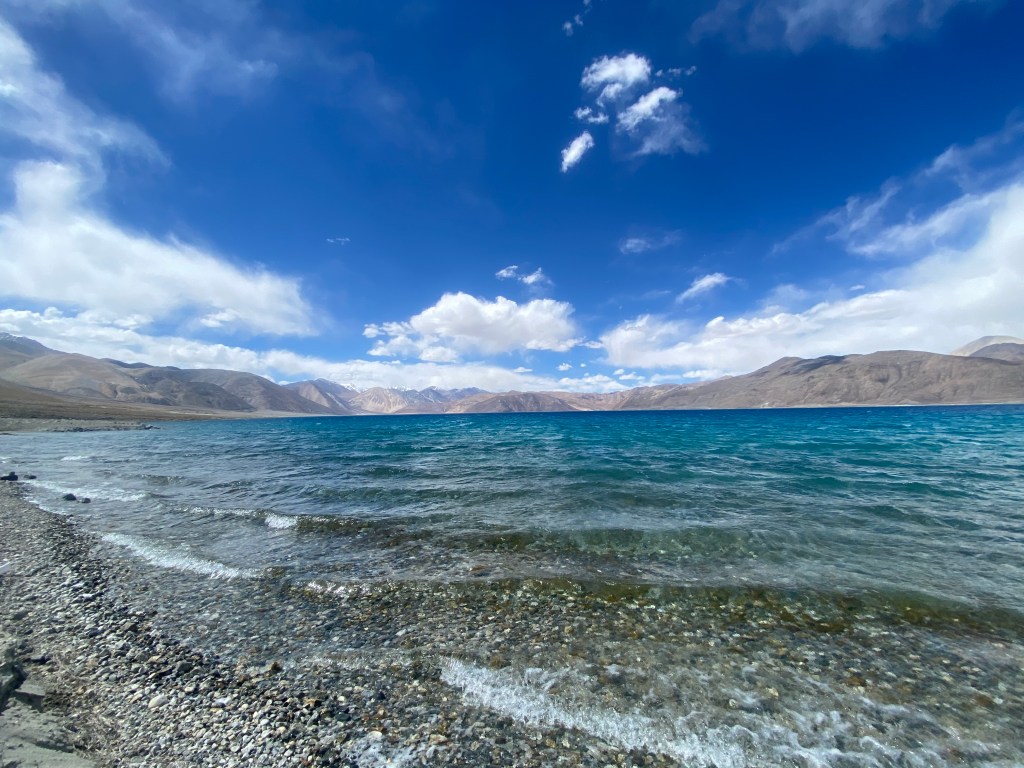
Pangong Tso is so much more than a water body, it is a living remnant of natural history.
Anyone who’s been to Pangong Tso will testify to it’s limitless beauty. Glittering amidst snow capped mountains, the water body is one of its kinds. Different hues of blue adorn it’s large expanse.
Pangong Tso is not only a beautiful water body but also a living remnant of natural history. According to geography, the Tethys sea was an ancient water body that existed in this part of the world. As the two continents collided to give rise to the Himalayas, the sea was subsumed, except some bits of it which remained as lakes. Other theories trace the origin of high altitude lakes to later tectonic activities. Either way, lakes like Pangong Tso in the Trans-Himalayas are living remnants of natural history.

Pangong Tso is an immense water body, approximately one third of which is located in Ladakh and the other two third is part of Tibet. The word Tso means an immense water body; it’s equivalence can also be sought in the word sea. It is located in Changthang, which is a distinct region that stretches across parts of Ladakh and Tibet.
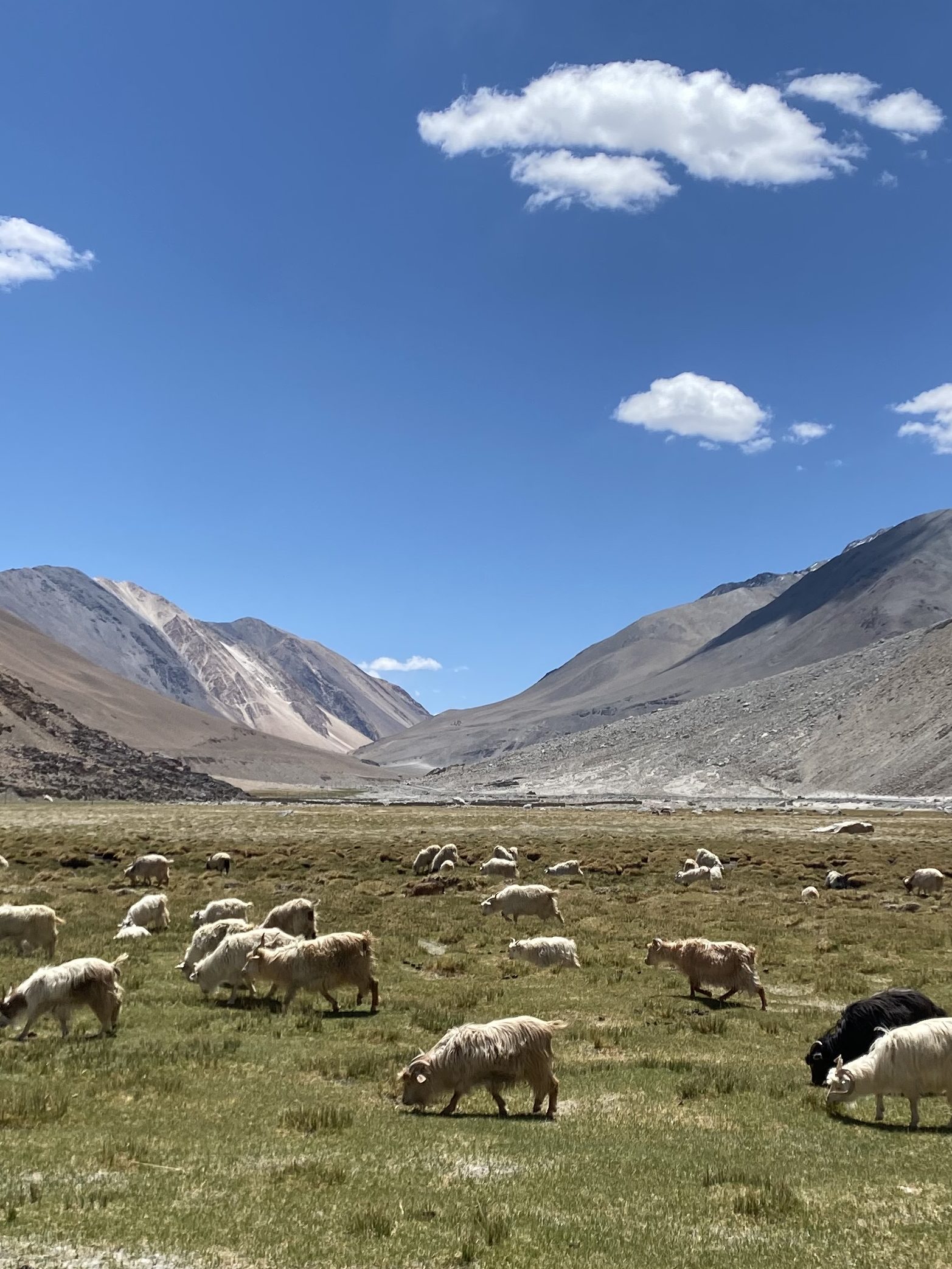
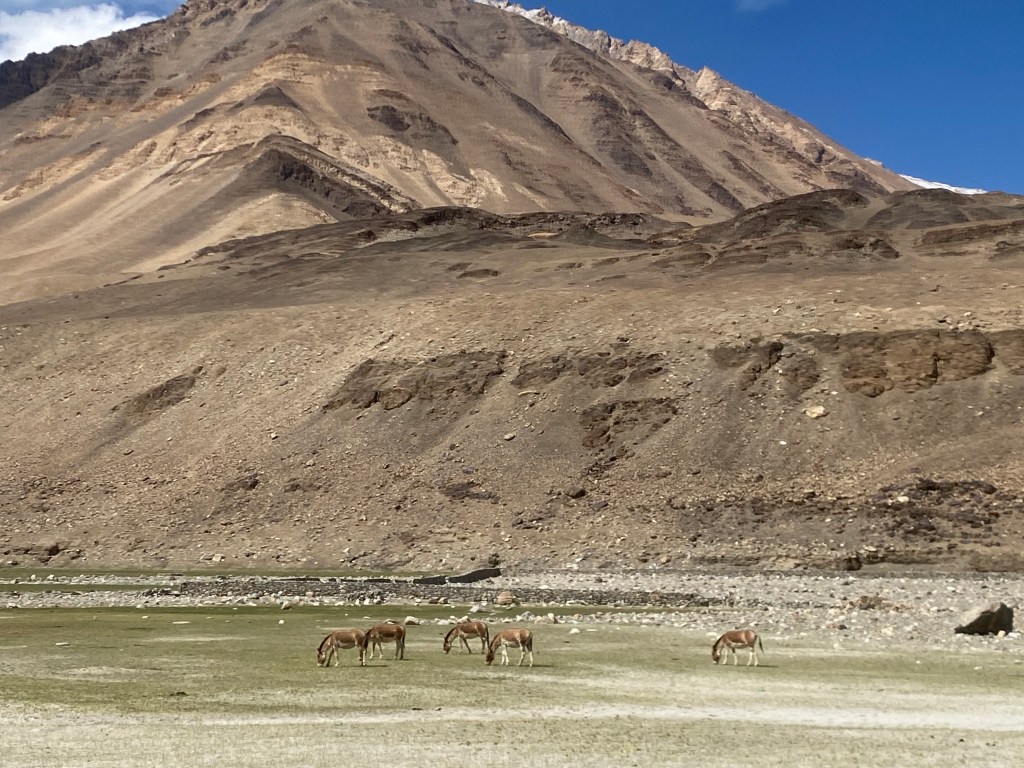
Changthang is a vast region where semi-nomadic and nomadic pastoralism is prevalent; though this way of life is now facing many challenges due to modern influences. In one of the above images one can see the freedom with which the shepherdess allows her goats to graze. It’s beautiful to know that there are still places on this earth where goats jump from one grassy mound to the other like the ones in cartoons. And no amount of economic ‘utilisation’ of land through industrialisation could ever match upto the wonder of watching goats hop around like animated ones; after all, the beauty of animation is inspired from real life. We encountered many other animals like Yaks, Kiang (Tibetan Wild Ass), Riwong (Wild hare) and Phia (marmot). The fact that so many animals could easily be spotted is testament to the preservation of their habitat atleast until now, and perhaps we can all hope to become people who have the will to ensure that animals continue to have access to what is rightfully theirs. I’ve only visited Pangong Tso a few times, yet this time I thought I noticed many more Kiangs than I had previously. This observation was corroborated with a few people’s accounts of how many Kiangs have apparently entered Ladakh from the Tibetan side of Changthang. You can notice multiple Kiangs grazing together in my pictures. Kiangs are wild animals; many say that upon human touch they fall ill. In anycase, Kiangs are super fast, so no human will be able to catch upto them.
All in all, my recent visit to Pangong Tso was magical. But I couldn’t possibly go on and on about it’s beauty without also commenting on the detrimental impact of climate change visible enroute. Throughout our journey, we came across various water bodies that had dried up completely due to the lack of water owing to loss of glaciers. One of the most jarring examples is that of the small lake that one is supposed to encounter right before reaching Pangong Tso. That lake used to be such a landmark that often people joked with newcomers by saying that that small lake was Pangong Tso. Now instead of the small lake, all that exists is sand. This is just one of the many examples of the innumerable losses caused by climate change. Many remnants of natural history and vital sources of water have been forced to disappear into oblivion; do we have the will to save the rest?
Pangong Tso is one such living remnant of natural history. Glimerring within two lands, it’s deep waters have a lot to tell. Like the sea, it’s waves carry messages, from somewhere far yet near? Azure blue answers to the questions in one’s heart?