Written and photographed by Rinchen Angmo
The pictures in this photo essay could possibly depict the myriad microcosms inhabited by different beings within the world of Leh Main Market area. Since I hadn’t taken these with the intention of later turning them into a photo essay, would it perhaps be okay to say that there is a somewhat natural element to the pictures’ composition? A somewhat natural element that wouldn’t have been captured if not for the mobility facilitated by new media.

Anyone who has been to Leh Main Market will know that the little kids who live in the area make the market their playground: playing football, cycling, skateboarding and roller skating. Skateboarding has really taken off in Leh. In a span of a few years, I have noticed an increasing number of skateboarders. This year, I also spotted many roller-skaters; could this be a convenient way to keep ice-skating skills intact? In Ladakh, during the winters, all water bodies get completely frozen: forming natural ice skating arenas. Hence, many take to the winter sport; however, since ice-skates are expensive, not many can afford the sport.
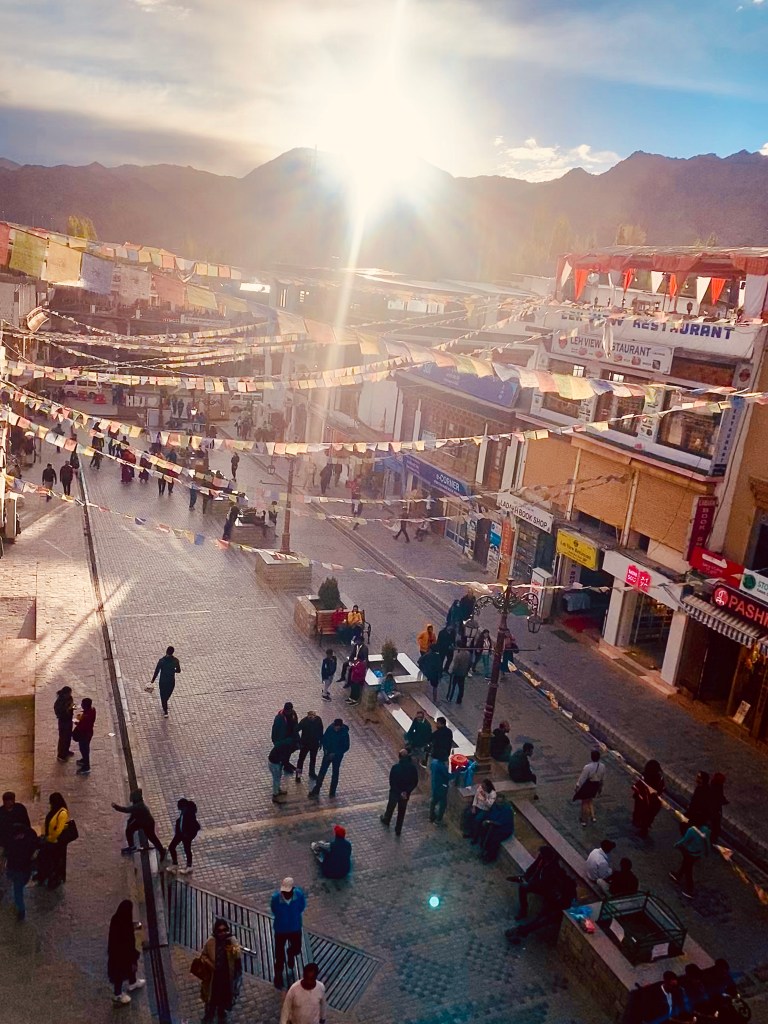
What I really like about Leh Main Market is that, compared to commercial areas in other parts of the world, it stands for something much more than commerciality. When you visit Leh Market in the summer evenings, you will notice a multitude of people just sitting on the benches and talking; the aura is filled more with a sense of celebration than commercialization.
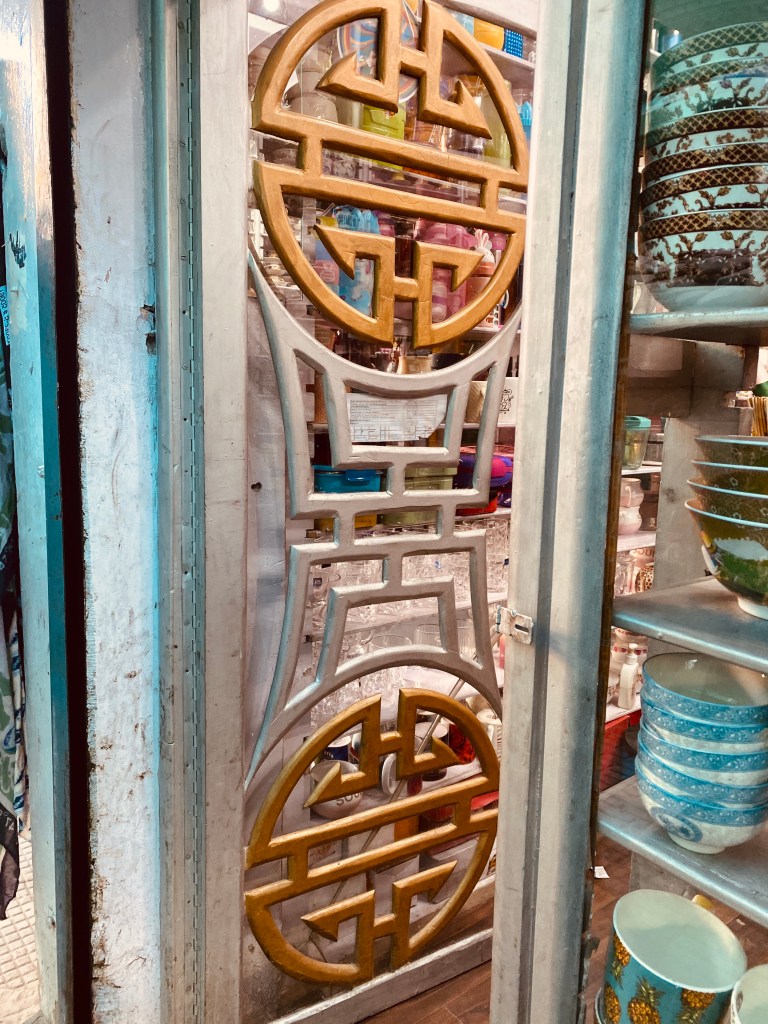
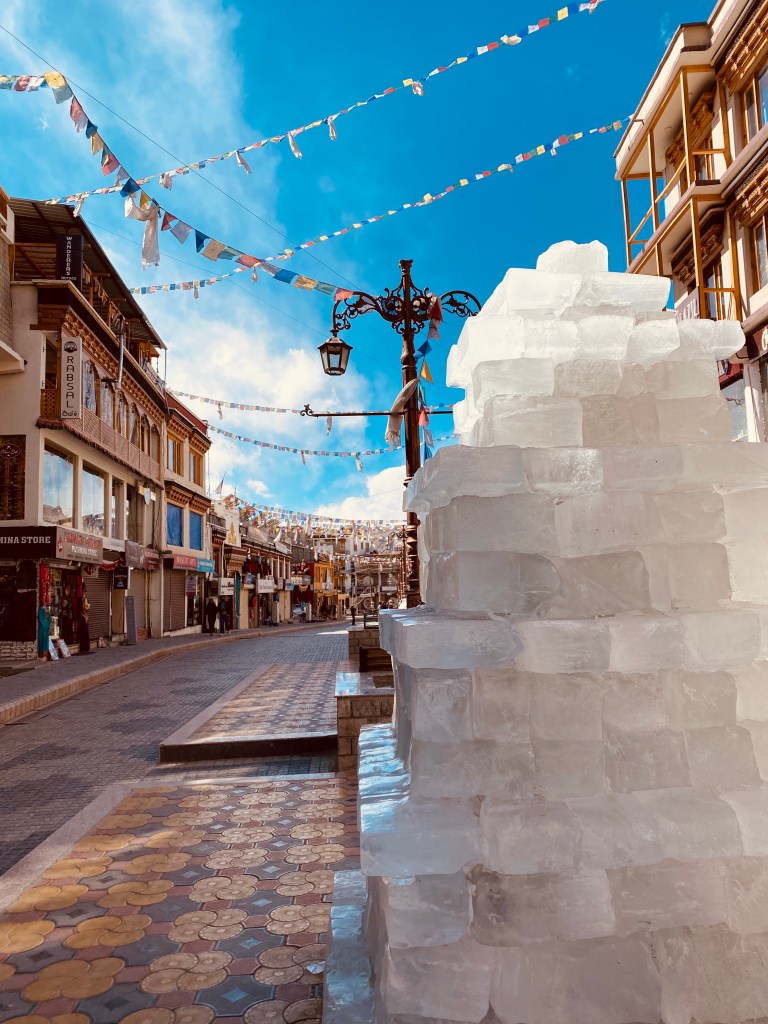
One can notice in these pictures that Leh Market’s aesthetic is simultaneously traditional and modern. Religious monuments and structures are integral to the ethos of the market area. Almost every venture is imbued with a sense of cultural celebration. Even secular buildings reflect people’s choice to interweave religious, cultural and modern symbols in the construction of their spatial aesthetics.


Then there are the ladies who sell vegetables. They grow these in their kitchen gardens (tsas) and then sell them in the market. What I admire is the grandeur with which they sell their vegetables. They all sit with their vegetables displayed and many of them weave headbands (which have been quite the trend amongst domestic tourists). In Ladakh, it is not at all unusual to see women occupying public spaces with an undeterred assertion of their individuality and these ladies who sell vegetables are just one of the many such examples.

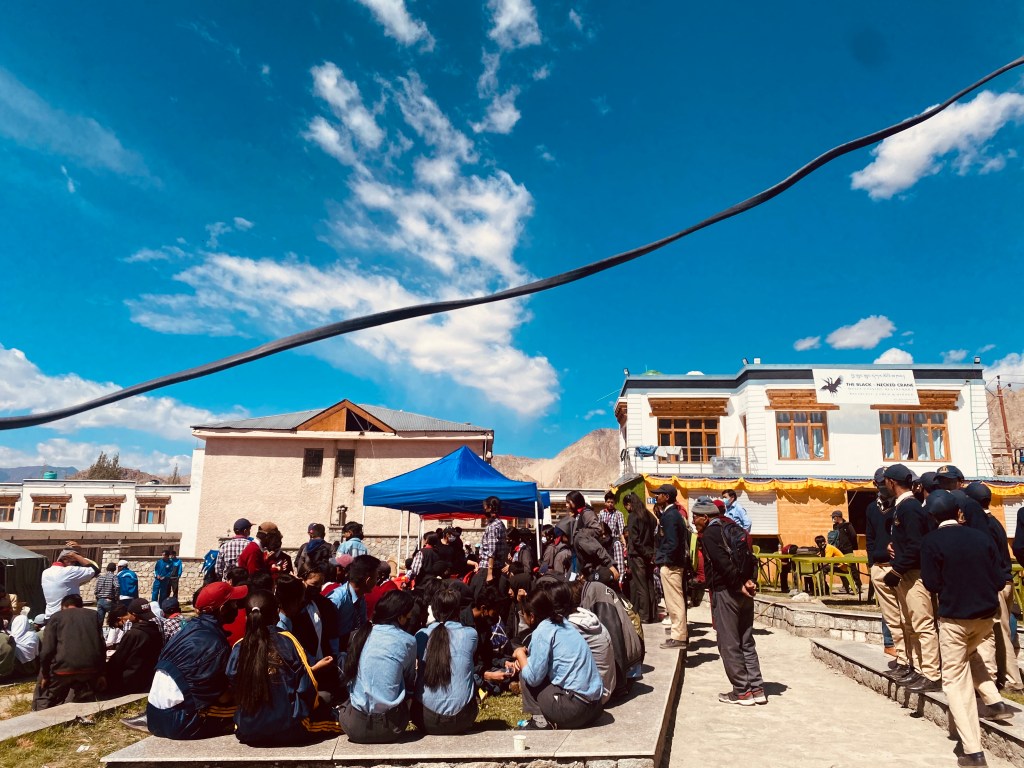
One can observe from the above picture that girls and boys have the same uniform in most schools in Leh; the predominantly cold climate makes the incorporation of skirts unnecessary in school uniforms.
With the increasing predominance of technology, its becomes important to carve out a space for oneself within the microcosm of new media. After all, one’s individual expression will diversify the collective discourse within new media. It is through such diverse narratives that new media mediates a fresh experience of locations for everyone.
Posting this photo essay is almost like sharing a glimpse of my walks in Leh from about 2020 to 2023. And that can reflect so many things ranging from the fact that I have the privilege to have the time to take walks to how every element in each picture completes my image of what I want the picture look like. Every picture is a reflection of what the person behind the lens wants to capture and hence what that person wants to share someday with someone. Even though I hadn’t thought of a photo essay, maybe I had somewhere in my mind thought of sharing these photos with the Rewa Sum collective.

Beautifully captured snapshots of Leh Market Area.
LikeLike
Thank you so much!
LikeLike