The beauty of village life in Ladakh
-Rinchen Angmo
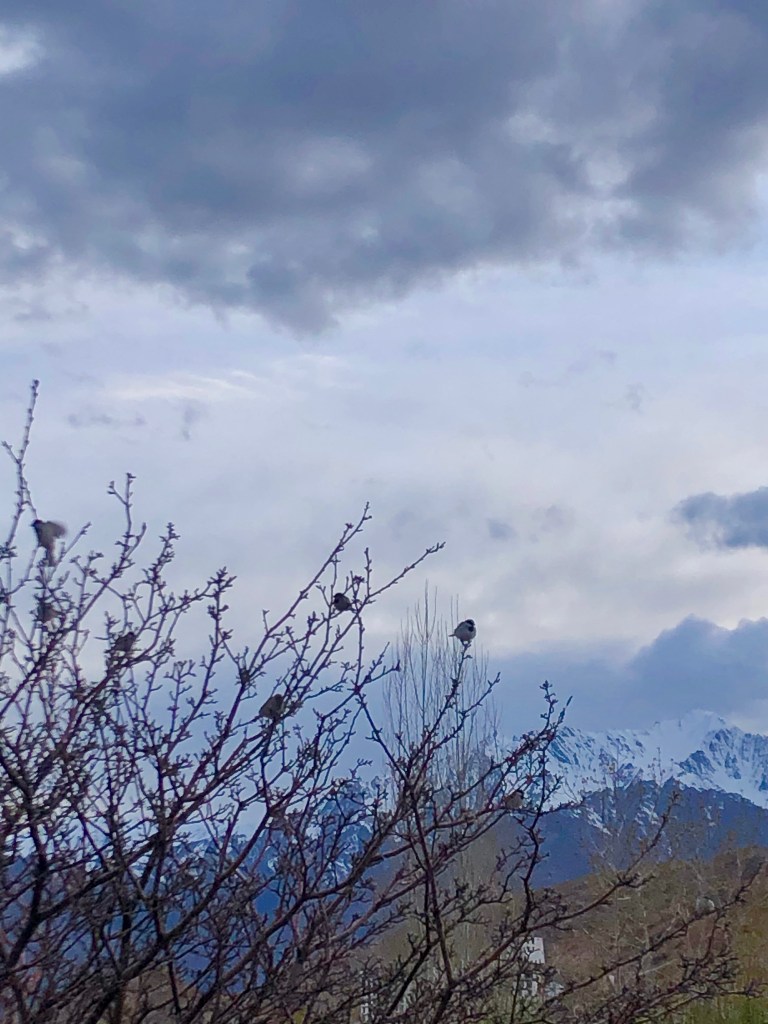
Life has come upside down throughout the world and the urban areas of Ladakh. However, in most villages in Ladakh, life goes on as usual. Most villages here haven’t been either directly or indirectly been affected by covid-19. Not only is there an absence of corona cases, but also their livelihood has barely been affected. As people in villages live a primarily agricultural way of life, they eat the food they grow and make money from the surplus. In stark contrast, people living in urban areas like Leh have been struck hard economically due to the heavy reliance on tourism. What a wonderful way of nature to teach us that unsustainable ways of living can truly result in the inability to sustain even one’s own life. Over the past few years, people in Leh have been building luxury hotels and tourism ventures as if there was no other alternative. Moreover, the mindless nature of the growth of hollow concrete structures stand in stark contrast to the values that we as a people have been living by from time immemorial. In this rat race of money making through often questionable means, we’ve lost sight of all that was part of our way of life. A way of life that is still sustained in villages and is now sustaining them when the rest of the world suffers. Not only is village life environmentally friendly, but it is also socially uplifting. Besides the petty disagreements here and there, the whole village community comes together as one whole to help each other.
Though my grandparents shifted to Leh in their day, we visit Chemrey (my ancestral village) often. And each time I’m touched by something that is not quite there anywhere else. Though the village is not densely populated, everybody knows everybody. Everybody helps everybody.
What I love most is the candour with which people interact here. Of course, every human has one’s cunning ways, but here I don’t see malice in anyone’s eyes. Though it’s a ‘small world’, people’s hearts seem bigger. Mistakes are not held onto for grudges, a helping hand does not compel a sense of obligation.
My account would be incomplete if I didn’t include Ane (a nun), our house caretaker. Many may pity her ‘ignorance’, but in my opinion she’s probably one of the happiest people on earth. Her health is impeccable; throughout the harsh winter, she didn’t as much as get a cold. The only health concern she’s voiced is probably a headache, that too a long time back. Each time we come home, she fills us in on what everyone in the village has been up to: the latest updates, the notorious dogs of Thanmangla, harvest season, people’s speculations about when we’d come, “why were we building a traditional style mud-house in this day and age”, and “where would the windows be placed?”… The windows… I wish I could open a window here for the world to see the richness of simplicity.
Many may call it a ‘small’ place, but really, what was the need for a ‘bigger’ place? Aren’t we all paying a price for our mindless ‘big people’s’ behavior? I mean what are we even at? Does anyone really know?
Of course, my once-in-a-blue-moon visits to my village may have rendered me a myopic vision of village life. But, something in the air and people’s eyes tells me that life here is a little happier, simpler, and a lot bigger than we ‘urban-small-minded-people‘ can even fathom.
